Connect with us

Latest

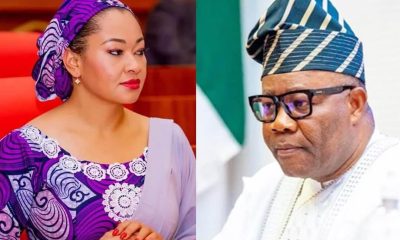
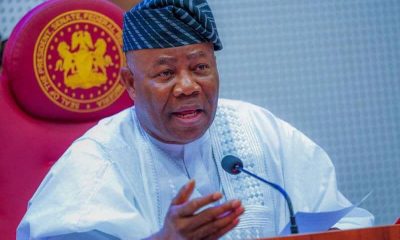
“Opposition In Disarray”: Akpabio Throws Shade, But Is He Missing The Bigger Picture?

Published

on

“Opposition In Disarray”: Akpabio Throws Shade, But Is He Missing The Bigger Picture?

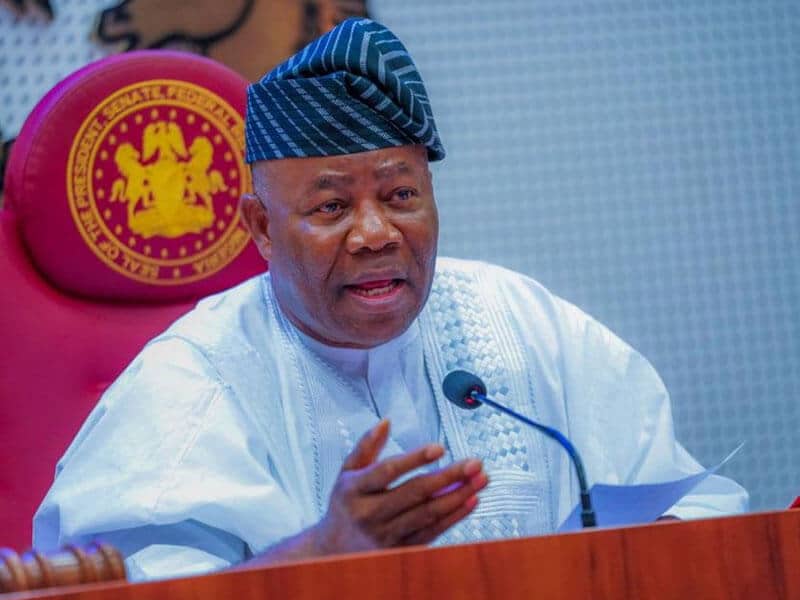
At a time when Nigeria’s political future seems increasingly uncertain, Senate President Godswill Akpabio has taken a swipe at opposition parties, suggesting that their inability to unify stems from their constant criticism of President Bola Tinubu’s administration. But while his comments were cloaked in political banter, they raise a more serious question: Is Nigeria’s democracy being deepened or diluted?


The Venue, The Message, and The Jab

Akpabio made the remarks during the commissioning of a newly constructed Left-Hand Service Carriageway in Abuja — a public works project framed as a sign of progress under the current government. The event drew not only members of the ruling All Progressives Congress (APC) but also notable PDP figures like former governors Ifeanyi Ugwuanyi and Ayo Fayose, adding a rich layer of irony to his comments.

In a statement echoing President Tinubu’s Democracy Day address, Akpabio said:

“Like the president said that he does not want a one-party state for Nigeria. He is praying that the opposition would put their houses in order… But you will never come together when you continue to tell lies on a daily basis.”

To many observers, it sounded less like an olive branch and more like a political elbow to the ribs.


The Opposition’s Challenge: Disunity or Delegitimization?

It’s no secret that Nigeria’s major opposition parties — particularly the PDP and Labour Party — have struggled to present a united front. Leadership crises, internal betrayal, and ideological confusion have left them fragmented. But Akpabio’s suggestion that “telling lies daily” is what keeps them from uniting skirts a deeper issue: criticism is a core function of opposition in any democracy.

In a functioning democratic setup, opposing views are not just tolerated — they are necessary. When criticism is automatically labeled as “falsehood” or “unpatriotic,” the space for political accountability begins to shrink.


Tinubu’s One-Party Warning: Strategic or Symbolic?

Interestingly, President Tinubu himself has voiced concern about the dangers of a one-party state — a rare admission from a sitting leader in control of both the executive and legislative branches. But this “concern” might also be a calculated political move.

By appearing to welcome a strong opposition, Tinubu and his allies can deflect accusations of authoritarian drift. Meanwhile, control remains centralized and unchallenged, particularly when opposition voices are delegitimized as mere noise or misinformation.

Akpabio’s own words confirm this strategy:

“If you cannot come together, [the president] would not help you to come together. This is politics.”

Translation? Your dysfunction is our advantage.


From 1960 to Now: A Nation Evolving, But How?

Akpabio also rhetorically asked: “Was Nigeria like this in 1960? Was Abuja like this three years ago?”

True, Nigeria’s infrastructure has seen notable growth, and Abuja continues to transform. But the real question isn’t whether buildings have gone up — it’s whether institutions have been strengthened, whether trust in governance has improved, and whether the average Nigerian feels more secure and economically empowered today than yesterday.

And here, both ruling and opposition parties have fallen short.


Conclusion: What Nigeria Needs More Than Banter

Akpabio’s speech, full of sarcasm and strategic deflection, captures a moment of tension in Nigeria’s political evolution. Yes, the opposition is divided. Yes, some criticisms are exaggerated or politically motivated. But to frame all dissent as dishonest is dangerous, and to gloat over a fractured opposition is shortsighted.

What Nigeria needs isn’t less opposition — it needs a stronger, more credible opposition that can challenge power constructively, propose alternatives, and hold leaders accountable.

Democracy is not a spectator sport. And in the game of politics, mocking the other team won’t build a better country.


Do you think Akpabio is right about the opposition’s failures, or is he simply deflecting from real issues? Share your thoughts in the comments.

Continue Reading
Click to comment

Leave a Reply

Your email address will not be published. Required fields are marked *

Latest

Osun Governorship: APC Committee Promises Transparent, Fair Delegate Congress Across The State

Published

on

Osun Governorship: APC Committee Promises Transparent, Fair Delegate Congress Across The State

The All Progressives Congress (APC) Gubernatorial Delegate Congress Committee has officially arrived in Osun State ahead of the party’s highly anticipated ward-level congresses.

The committee, led by Chairman Sheu Umar Dange, paid a courtesy visit to the state APC leadership on Tuesday, December 9, at the party secretariat along Osogbo-Gbongan Road.

APC Pledges Transparency and Fairness

During the meeting with Osun APC Chairman Tajudeen Lawal and local government party leaders, Dange emphasized the committee’s dedication to fairness and transparency.

“We are ready to conduct delegate congresses in all 332 wards across the state. Our activities will be conducted without bias, and we welcome any complaints to address them fairly,” he said.

Dange urged party stakeholders to see their participation in the exercise as a crucial contribution to strengthening APC’s electoral success in Osun.

Ensuring a Smooth Congress

Secretary of the committee, Chiedu Eluemunoh, explained that all mechanisms for a smooth process were already in place. This includes the deployment of ad-hoc staff to all wards to ensure efficiency.

He clarified that only revalidated members of the APC in Osun will be eligible to vote.

“Being a party member does not automatically qualify you to vote. Only those revalidated will participate in the congress,” Eluemunoh noted.

To address potential grievances, an Appeal Committee has been set up, with sittings scheduled to begin on December 10, to hear complaints from any aggrieved members.

State APC Leadership Pledges Full Support

In response, Osun APC Chairman Tajudeen Lawal welcomed the congress committee and assured them of the full support of the State Working Committee (SWC) to ensure a successful and credible exercise.

“We are committed to providing all the necessary support to guarantee a smooth and transparent congress for our party members,” Lawal stated.

Continue Reading

Crime

Fresh Wave Of Insecurity: Pregnant Woman And Several Residents Abducted In Niger And FCT

Published

on

Continue Reading

Crime

Dalung Breaks Silence: TikTok Chat With Bandit Exposes Deep Secrets Behind The Violence

Published

on

Dalung Breaks Silence: TikTok Chat With Bandit Exposes Deep Secrets Behind The Violence

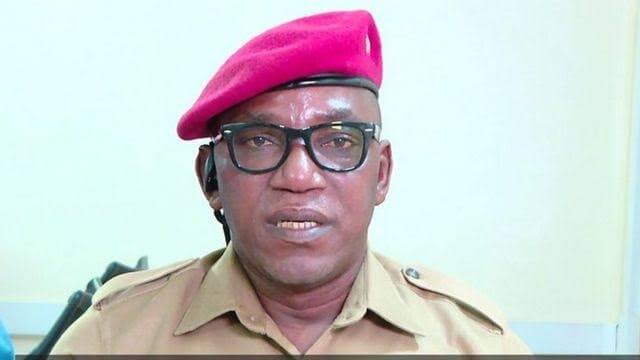
Former Minister of Sports, Solomon Dalung, has opened up about a surprising and thought-provoking conversation he once had with a young man who claimed to be living in the bush as a bandit. Dalung shared the experience during an interview with News Central, explaining how the encounter gave him a deeper understanding of the issues fueling insecurity……CONTINUE READING

According to Dalung, he was browsing TikTok when he came across the young man, who openly described himself as someone living in the forest due to ongoing conflict. Curious, Dalung asked why they engaged in violent activities. The young man responded that they had suffered losses themselves and felt targeted by vigilante groups who, according to him, harmed their people and took their cattle. This, he said, pushed them into retaliation and led them deeper into the bush.

Dalung explained that he challenged the young man, pointing out that innocent people—including other Fulani individuals—were being harmed in the process. The young man replied that, from their viewpoint, only those living in the bush were considered part of their community, while anyone living in town was seen differently. It was a response that, according to Dalung, revealed how distorted perceptions can worsen the cycle of conflict.

Wanting to know if there was any path toward peace, Dalung asked what could help end the violence. The young man shared that they were open to negotiation and discussions that could encourage them to give up their weapons and reintegrate into society. Dalung noted that the confidence with which the young man spoke was unsettling, but it also showed that dialogue could be part of the solution.

Reflecting on the experience, Dalung urged the National Assembly to consider constitutional changes that would allow Nigerians the legal right to defend themselves responsibly, especially in areas affected by insecurity.

His conversation serves as a reminder of how complex the nation’s security challenges are—and how personal engagement, understanding, and strategic dialogue may help chart a way forward.

Continue Reading

Trending