
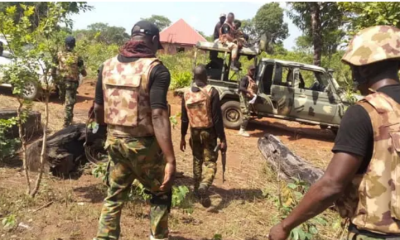


Fresh Wave Of Insecurity: Pregnant Woman And Several Residents Abducted In Niger And FCT
Nigeria continues to face serious security challenges as multiple communities in Niger State and the Federal Capital Territory (FCT) experienced coordinated attacks this week. These incidents come just days after the abduction of students from St. Mary’s Catholic School in Niger State……CONTINUE READING
New Abduction in Niger State
Residents of Palaita community in Erena Ward, Shiroro Local Government Area were thrown into distress on Wednesday when armed groups invaded a rice farm and abducted several workers, including a pregnant woman. Community sources estimated the number of kidnapped victims to be around 24, while the Niger State Police Command confirmed 10 abductions as investigations continue.
Eyewitnesses said the incident occurred around 2:00 p.m. while farmers were busy harvesting their crops. Despite the community’s close proximity to a military base in Erena, the attackers escaped before security personnel arrived.
In a separate incident in Kakuru community, also in Erena Ward, residents reported that a visually impaired man was assaulted after refusing to hand over a mobile phone. The victim was given first aid, though his current condition remains unclear.
Police spokesperson, SP Wasiu Abiodun, confirmed the attacks, assuring that security agencies are actively working to rescue the victims and restore calm in the affected areas.
Fresh Abductions in the FCT
In Abuja, communities in the Bwari Area Council faced renewed tension following another night attack in Gidan-Bijimi, a settlement near the Kaduna boundary. Six young women and a 16-year-old boy were taken during the raid, according to residents.
The attack, which occurred around 9:47 p.m. on Wednesday, created panic among locals already concerned by previous incidents in the region. Local vigilance groups attempted to intervene but retreated due to limited resources.
As of Thursday morning, families reported that no contact had been made with the attackers, while police were still verifying the details.
Church Confirms Passing of Kaduna Cleric
The Diocese of Kaduna, Anglican Communion, has announced the death of Venerable Edwin Achi, who was abducted in October along with his wife and daughter. His passing was described as a deep loss to the Diocese and the wider Christian community. The Church also announced the cancellation of the upcoming “Stand Up for Jesus 2025” event in his honour.
The Diocese assured that prayers continue for the safe return of his wife and daughter.
Federal Government Responds to Rising Insecurity
Minister of Defence, Mohammed Badaru Abubakar, reaffirmed that the Nigerian military is intensifying efforts to eliminate criminal networks responsible for attacks across the country. He explained that intermittent assaults are typical of guerrilla-style tactics but insisted that security forces are “working day and night” to restore normalcy.
He further confirmed that the Federal Government has launched a full investigation into recent school abductions, including claims that security personnel were withdrawn prior to an incident in Kebbi State.
Police Redeploy Over 11,000 Personnel
Inspector-General of Police, Kayode Egbetokun, revealed that 11,566 police officers previously assigned to VIP protection have now been deployed to underserved communities to strengthen grassroots security.
He stated that the initiative is part of broader reforms aimed at improving community policing and ensuring fair distribution of manpower nationwide.
Cardinal Onaiyekan Calls for Better Equipment, Not More Personnel
Catholic Cardinal John Onaiyekan called on the Federal Government to prioritize properly equipping the officers already serving across the country rather than recruiting additional personnel. The Cardinal emphasized the need for immediate action, stressing that adequately supported police officers are capable of confronting insecurity.
Experts and Community Leaders Advocate Unity
Former Senator Shehu Sani and humanitarian organizations participating in the 9th International Conference on Love and Tolerance urged Nigerians to embrace unity, understanding, and dialogue. They highlighted the importance of addressing root causes of conflict, promoting peaceful coexistence, and supporting security agencies with the resources they need to protect communities.