Connect with us

Crime

Man Beaten For Allegedly Killing Sacred Snake In Anambra: Senator Condemns Attack, Demands Justice

Published

on

Man Beaten For Allegedly Killing Sacred Snake In Anambra: Senator Condemns Attack, Demands Justice

ABAKALIKI, Nigeria — A shocking case of mob justice has emerged from Nkpor, Idemili North Local Government Area of Anambra State, where a man identified as Mr. Michael Eje, an Ebonyi State indigene, was brutally beaten and paraded by local youths for allegedly killing a snake considered sacred in the community.

A disturbing video of the incident, which has since gone viral on social media, shows Eje being ridiculed, forced to chant songs, and humiliated in public after killing the reptile. Reports indicate that he was later fined ₦50,000 by community leaders as part of a “cleansing ritual.”


Senator Nwebonyi Reacts

The Deputy Chief Whip of the Nigerian Senate, Senator Peter Onyekachi Nwebonyi, who represents Ebonyi North, condemned the act in strong terms, describing it as “barbaric and dehumanizing.”

“I wonder why a man should be subjected to such a harrowing experience for killing a snake that posed a threat to him,” the senator said.

Nwebonyi called on Anambra State Governor Charles Soludo to publicly denounce the incident and ensure that such actions do not recur. He compared the urgency of the matter to Soludo’s swift decision to rename Abakaliki Street in Awka, which sparked controversy between Ebonyi and Anambra indigenes.

The senator also directed the leadership of the Ebonyi State Indigenes Association in Anambra, led by Chief Moses Ofoke, to investigate the situation and provide support to the victim and his family.


Victim’s Ordeal

Narrating his experience, Eje, who hails from Onueke in Ezza South Local Government Area of Ebonyi State, explained that he was working at a construction site when he encountered the snake.

“The snake jumped out from under some blocks and attacked me. Out of fear, I killed it to protect myself,” he said.

Unaware of the community’s customs, Eje stated that he had never been warned that killing a snake was considered an abomination in Nkpor. After the incident, he said local youths descended on him, beating him, forcing him to chant funeral dirges for the reptile, and parading him through the streets.

His wife, visibly shaken, recounted how her husband was humiliated in front of the community. The family now fears for their safety and livelihood.


Clash of Culture and Human Rights

The incident has raised critical questions about the tension between traditional beliefs and modern human rights standards. While several Nigerian communities hold certain animals—such as snakes, crocodiles, or monkeys—as sacred, human rights activists argue that punishing individuals for killing such animals violates personal freedoms and the constitutional right to life and dignity.

Legal experts note that while Nigerian law recognizes cultural practices, the 1999 Constitution of Nigeria guarantees fundamental rights that supersede traditional norms.


Wider Reactions

  • Human rights groups have called for an investigation, insisting that mob justice cannot be tolerated under any circumstance.

  • Cultural custodians in Anambra argue that communities must balance tradition with awareness, ensuring non-indigenes are informed of customs to avoid clashes.

  • Diaspora groups, particularly in South Africa and the UK, where many Nigerians face xenophobia, have expressed concern, drawing parallels between discrimination at home and abroad.


Global Parallels

The Anambra incident echoes similar cases across Africa and beyond where cultural reverence for animals has clashed with modern governance:

  • In India, cows are considered sacred in Hindu culture, leading to violent mob attacks against people accused of slaughtering them.

  • In Uganda and Kenya, sacred shrines linked to snakes and crocodiles still play major roles in local spirituality, sometimes leading to conflicts with outsiders.

  • In South Africa, xenophobic attacks have been tied to cultural mistrust, further fueling debates about tolerance and unity.

These parallels show that Nigeria’s challenge is not isolated but part of a larger global struggle between tradition and modern human rights enforcement.


Call for Government Intervention

Senator Nwebonyi has demanded that Governor Soludo take immediate steps to investigate the incident, ensure justice for the victim, and educate communities on the limits of cultural enforcement.

Human rights advocates also urge the National Human Rights Commission (NHRC) and the Nigerian Police Force to intervene, warning that unchecked mob justice undermines Nigeria’s global image as Africa’s largest democracy.


Community Tensions

The incident is particularly sensitive given recent political tensions between Ebonyi and Anambra States, with disputes over boundaries and cultural recognition sparking debates. Observers warn that if not properly addressed, such incidents may deepen mistrust between communities in the South-East.

Continue Reading
Click to comment

Leave a Reply

Your email address will not be published. Required fields are marked *

Crime

Fresh Wave Of Insecurity: Pregnant Woman And Several Residents Abducted In Niger And FCT

Published

on

Continue Reading

Crime

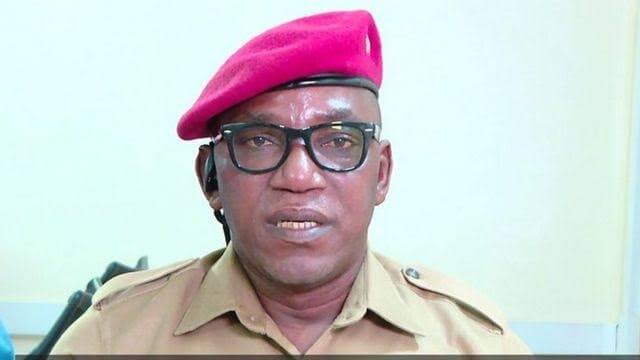
Dalung Breaks Silence: TikTok Chat With Bandit Exposes Deep Secrets Behind The Violence

Published

on

Dalung Breaks Silence: TikTok Chat With Bandit Exposes Deep Secrets Behind The Violence

Former Minister of Sports, Solomon Dalung, has opened up about a surprising and thought-provoking conversation he once had with a young man who claimed to be living in the bush as a bandit. Dalung shared the experience during an interview with News Central, explaining how the encounter gave him a deeper understanding of the issues fueling insecurity……CONTINUE READING

According to Dalung, he was browsing TikTok when he came across the young man, who openly described himself as someone living in the forest due to ongoing conflict. Curious, Dalung asked why they engaged in violent activities. The young man responded that they had suffered losses themselves and felt targeted by vigilante groups who, according to him, harmed their people and took their cattle. This, he said, pushed them into retaliation and led them deeper into the bush.

Dalung explained that he challenged the young man, pointing out that innocent people—including other Fulani individuals—were being harmed in the process. The young man replied that, from their viewpoint, only those living in the bush were considered part of their community, while anyone living in town was seen differently. It was a response that, according to Dalung, revealed how distorted perceptions can worsen the cycle of conflict.

Wanting to know if there was any path toward peace, Dalung asked what could help end the violence. The young man shared that they were open to negotiation and discussions that could encourage them to give up their weapons and reintegrate into society. Dalung noted that the confidence with which the young man spoke was unsettling, but it also showed that dialogue could be part of the solution.

Reflecting on the experience, Dalung urged the National Assembly to consider constitutional changes that would allow Nigerians the legal right to defend themselves responsibly, especially in areas affected by insecurity.

His conversation serves as a reminder of how complex the nation’s security challenges are—and how personal engagement, understanding, and strategic dialogue may help chart a way forward.

Continue Reading

Crime

BREAKING: EFCC Drags Ex-Justice Minister Malami—What He Said Will Shock You

Published

on

BREAKING: EFCC Drags Ex-Justice Minister Malami—What He Said Will Shock You

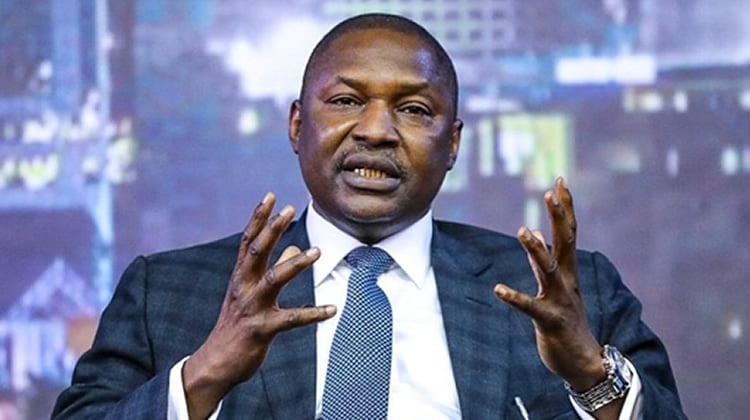
Nigeria’s former Attorney-General of the Federation and Minister of Justice, Abubakar Malami (SAN), has confirmed that the Economic and Financial Crimes Commission (EFCC) has officially summoned him—sending shockwaves across the nation’s political landscape…….CONTINUE READING

Malami, who served from 2015 to 2023 under ex-President Muhammadu Buhari, broke the news himself in a bold announcement on his social media page, declaring that he is ready to face investigators head-on.

The once-powerful justice minister, known for steering some of the country’s most controversial legal battles—from massive asset recovery operations to heated anti-corruption reforms—now finds himself at the centre of a fresh probe.
Throughout his tenure, Malami was linked to numerous high-stakes decisions, arbitration wars, and sensitive financial crime cases that kept him in the public eye.

In recent years, however, scrutiny tightened around issues such as asset declarations and management of recovered funds—allegations he has firmly and repeatedly rejected.

For now, the EFCC remains tight-lipped, refusing to disclose what exactly Malami is being called in for, leaving the public buzzing with speculation.

In a confident statement on Facebook, Malami wrote:

“This is to confirm that I have been invited by the EFCC.
As a law-abiding and patriotic citizen, I reaffirm my commitment to honour the invitation.
I understand the spirit of accountability and transparency in public service—principles I have always advocated.
I am committed to sharing developments with the Nigerian public as they unfold.”

With Malami’s pledge to keep Nigerians updated, all eyes are now fixed on the unfolding drama—a saga that promises to shake up the nation’s justice and political corridors once again.

Continue Reading

Trending