Connect with us

Latest

Explosive Twist In IPOB Leader’s Trial: Nnamdi Kanu Seeks Disciplinary Action Against Judges

Published

on

Explosive Twist In IPOB Leader’s Trial: Nnamdi Kanu Seeks Disciplinary Action Against Judges

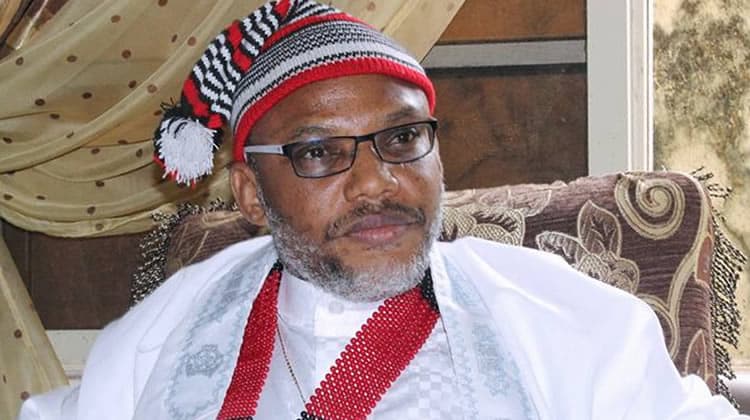
The legal battle surrounding Nnamdi Kanu, leader of the Indigenous People of Biafra (IPOB), has taken another dramatic turn as he formally petitioned the Nigerian Bar Association (NBA) against three serving Supreme Court justices. In his petition, Kanu accused the justices of professional misconduct and demanded that the NBA launch a disciplinary probe.

The petition, which has stirred conversations across Nigeria and the diaspora, highlights the ongoing friction between Kanu, the Nigerian judiciary, and the federal government. At the heart of the dispute is Kanu’s claim that the justices’ conduct in his appeal amounted to a miscarriage of justice.


The Petition and Allegations

According to Kanu’s legal team, the petition was directed to the NBA Disciplinary Committee, requesting a thorough inquiry into the actions of the three justices. Kanu alleged that their rulings in his recent appeal fell short of the standards of impartiality, fairness, and independence expected of the apex court.

Kanu, who has faced treasonable felony charges since 2015, maintains that his rights under both Nigerian and international law were violated. His petition reportedly argues that the judiciary must be held accountable to restore public trust in the legal system.

Legal analysts suggest that such a petition is rare, particularly when directed against sitting Supreme Court justices, making this a potentially historic case in Nigeria’s judicial and political history.


Wider Implications for Nigeria’s Judiciary

The petition has sparked debate among legal professionals and political observers. Some argue that Kanu’s move could embolden other litigants to challenge judicial conduct, while others warn that it may deepen mistrust in Nigeria’s already fragile justice system.

“The credibility of the judiciary is central to Nigeria’s democracy,” said Dr. Ibrahim Musa, a political analyst based in Abuja. “Whether you agree with Nnamdi Kanu or not, his petition forces a conversation about the integrity of our legal institutions.”

Internationally, watchdog organizations such as Amnesty International and Human Rights Watch have previously criticized Nigeria’s handling of Kanu’s trial, citing violations of due process and human rights. Kanu’s petition may draw further scrutiny from these groups, particularly as Nigeria seeks to present itself as a country committed to rule of law and democratic governance.


Background: The IPOB Struggle

Nnamdi Kanu rose to prominence as the leader of IPOB, a movement advocating for the secession of Biafra from Nigeria. His rhetoric and activism have sparked both fierce loyalty among supporters in the Southeast and sharp condemnation from the Nigerian government, which outlawed IPOB in 2017 and designated it a terrorist organization.

Kanu’s legal troubles have been ongoing for nearly a decade. After initially fleeing Nigeria, he was arrested in Kenya in 2021 under controversial circumstances, with many observers labeling his transfer to Nigeria as an extraordinary rendition—a practice condemned under international law.

Since then, his detention and trial have become flashpoints in Nigeria’s political and ethnic discourse, with many in the diaspora staging protests in London, Washington, New York, and other global cities to demand his release.


Global Reactions and Legal Standards

The petition resonates beyond Nigeria. Under the United Nations Basic Principles on the Independence of the Judiciary, judges are expected to maintain impartiality and avoid any appearance of bias. Any allegation of misconduct, particularly at the highest levels of a nation’s judiciary, naturally raises global concerns.

In similar cases elsewhere, such as judicial misconduct probes in South Africa and Kenya, civil society groups have emphasized the need for transparency to protect democratic institutions. Observers believe Nigeria now faces a critical test of whether its judicial oversight mechanisms can function independently without political interference.

For the African diaspora, particularly those with historical ties to the Biafra struggle, Kanu’s case is not merely about one man’s legal fight but about the broader question of justice, fairness, and recognition of minority voices in governance.


What Next for the NBA?

The Nigerian Bar Association has not yet issued an official response. However, under its statutes, the body has the authority to investigate complaints of professional misconduct against legal practitioners, including judicial officers.

If the NBA takes up Kanu’s petition, it could trigger a disciplinary process that may either exonerate the justices or recommend sanctions. While outright removal of Supreme Court justices is extremely rare, the reputational impact of such an inquiry would be significant.

For Kanu and his supporters, the petition is part of a broader legal and political strategy to highlight what they describe as systemic bias in Nigeria’s handling of IPOB-related issues. For the judiciary, however, it presents a delicate balancing act—upholding institutional integrity while managing one of the most polarizing cases in recent Nigerian history.

Continue Reading
Click to comment

Leave a Reply

Your email address will not be published. Required fields are marked *

Crime

Fresh Wave Of Insecurity: Pregnant Woman And Several Residents Abducted In Niger And FCT

Published

on

Continue Reading

Crime

Dalung Breaks Silence: TikTok Chat With Bandit Exposes Deep Secrets Behind The Violence

Published

on

Dalung Breaks Silence: TikTok Chat With Bandit Exposes Deep Secrets Behind The Violence

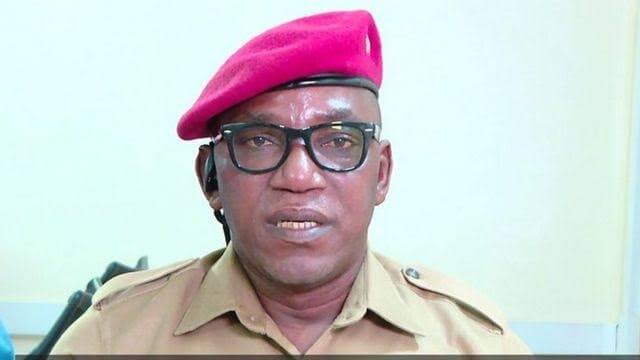
Former Minister of Sports, Solomon Dalung, has opened up about a surprising and thought-provoking conversation he once had with a young man who claimed to be living in the bush as a bandit. Dalung shared the experience during an interview with News Central, explaining how the encounter gave him a deeper understanding of the issues fueling insecurity……CONTINUE READING

According to Dalung, he was browsing TikTok when he came across the young man, who openly described himself as someone living in the forest due to ongoing conflict. Curious, Dalung asked why they engaged in violent activities. The young man responded that they had suffered losses themselves and felt targeted by vigilante groups who, according to him, harmed their people and took their cattle. This, he said, pushed them into retaliation and led them deeper into the bush.

Dalung explained that he challenged the young man, pointing out that innocent people—including other Fulani individuals—were being harmed in the process. The young man replied that, from their viewpoint, only those living in the bush were considered part of their community, while anyone living in town was seen differently. It was a response that, according to Dalung, revealed how distorted perceptions can worsen the cycle of conflict.

Wanting to know if there was any path toward peace, Dalung asked what could help end the violence. The young man shared that they were open to negotiation and discussions that could encourage them to give up their weapons and reintegrate into society. Dalung noted that the confidence with which the young man spoke was unsettling, but it also showed that dialogue could be part of the solution.

Reflecting on the experience, Dalung urged the National Assembly to consider constitutional changes that would allow Nigerians the legal right to defend themselves responsibly, especially in areas affected by insecurity.

His conversation serves as a reminder of how complex the nation’s security challenges are—and how personal engagement, understanding, and strategic dialogue may help chart a way forward.

Continue Reading

Latest

Oyo State: Millions Lost As Fire Damages Two Residential Buildings In Ibadan And Kishi

Published

on

Oyo State: Millions Lost As Fire Damages Two Residential Buildings In Ibadan And Kishi

Oyo State

Two separate fire incidents have destroyed properties worth millions of naira in Oyo State, affecting residential buildings in both Ibadan and Kishi on Wednesday night…..CONTINUE READING

The first incident occurred at 17 Prestige Estate, Joop Bad Hour Crescent, Onirele, Ibadan, where the living room of a four-bedroom duplex was severely damaged. Although the fire consumed valuable household items, no injuries or loss of life were recorded.

In Kishi town, a second fire broke out at 1 Alhaji Rosco Street, Ajangba Area, where the generator room of another four-bedroom residence was engulfed. The blaze also affected property worth millions of naira before firefighters arrived.

Chairman of the Oyo State Fire Service, Hon. Maroof Akinwande, confirmed both incidents on Friday. He praised the swift response of fire officers, noting that their timely intervention prevented the flames from spreading to other parts of the buildings.

According to Akinwande:

“When we arrived, the living room of the duplex was already on fire. Our officers launched a prompt and coordinated attack, preventing the fire from spreading further. No casualty was recorded, and properties worth millions were saved. The cause of the incident is still under investigation.”

He added that the Kishi incident was also contained quickly:

“Upon arrival, we discovered the generator room was completely engulfed. Our firemen acted immediately and stopped the fire from reaching the main building. It was fully extinguished in record time.”

The Oyo State Fire Service has urged residents to prioritize safety measures, maintain electrical and generator installations, and report emergencies promptly to reduce losses.

Continue Reading

Trending