
Connect with us

Latest

Democracy Will Die If We’re Paid Less – Lawmakers Defend Millions In Salariesto part-time legislators?” He Asked.

Published

on

Democracy Will Die If We’re Paid Less – Lawmakers Defend Millions In Salariesto part-time legislators?” He Asked.

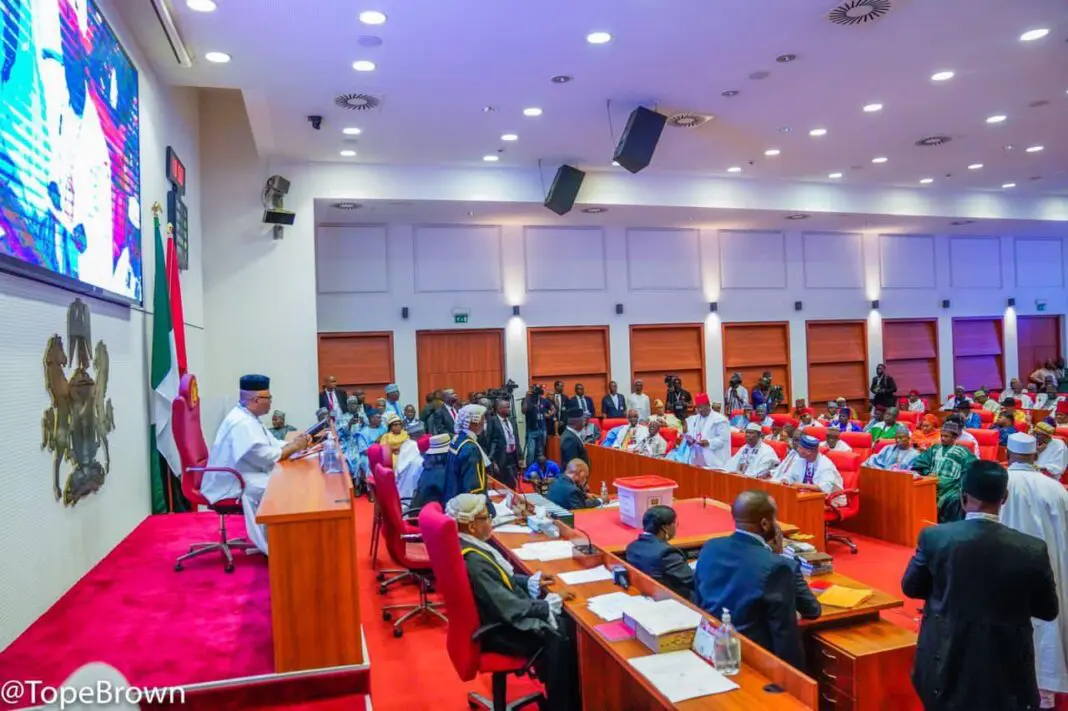
In a bold and controversial statement that’s sparking nationwide debate, Senate Spokesman Yemi Adaramodu has rejected calls for a part-time legislature in Nigeria, insisting that no cost-cutting measure should impact lawmakers’ earnings or the structure of full-time legislative work.

His remarks come amid ongoing conversations about government waste, bloated costs, and fiscal responsibility, especially in the face of Nigeria’s deepening economic challenges. But for Adaramodu, the price of democracy — at least in terms of legislative compensation — is not negotiable.


🏛️ The Proposal for a Part-Time Parliament

The idea of switching to a part-time National Assembly has gained traction in recent months, particularly among political commentators and civil society groups. Advocates argue that reducing sitting frequency and perks for the country’s 469 federal lawmakers (109 Senators and 360 Representatives) could save billions in public funds — money that could be redirected toward healthcare, education, and infrastructure.

But Adaramodu thinks otherwise. Speaking in an interview with Channels Television on Friday, the Senator declared:

“If the parliament is on part-time, then it means democracy is on part-time… There is no democracy that derides its parliament and thrives.”


💼 Defending Full-Time Lawmakers: ‘We Do More Than Make Laws’

Representing Ekiti South Senatorial District, Adaramodu painted a picture of lawmakers as frontline public servants — always accessible, always engaged.

“We go home almost every time, and we are the ones they run to — for naming ceremonies, building projects, school fees, even burials,” he said.

He emphasized that beyond lawmaking, legislators also carry out oversight functions, constituency representation, and play a unique role as the most accessible arm of government. According to him, of the three arms of government (executive, judiciary, and legislature), only lawmakers truly interact with citizens on a day-to-day basis.


💸 “Don’t Touch Our Salaries”

Adaramodu did not mince words about legislative pay:

“No level of cost-cutting should affect the allocations that go to lawmakers.”

This statement is likely to raise eyebrows in a country where millions are living below the poverty line and where legislators are among the highest-paid in the world, drawing massive allowances in addition to their base salaries.

Critics have long argued that Nigerian lawmakers earn disproportionately high incomes for relatively limited sitting days, and their perks — which often include housing, vehicle allowances, estacodes for foreign trips, and generous severance — place an undue burden on public finances.


🔎 Analysis: At What Cost Does Democracy Thrive?

The Senator’s defense of full-time legislature raises essential questions about the nature of representation, the cost of governance, and public trust.

While it’s true that lawmakers serve vital roles in oversight and advocacy for their constituencies, it’s also valid to ask:

  • Should Nigeria continue to fund one of the most expensive legislatures per capita in the world, even in the face of crippling debt and inflation?

  • Could a hybrid or streamlined model — fewer lawmakers, less frequent sessions, and capped allowances — ensure effective democracy at a lower cost?

  • Are lawmakers truly “accessible” when public complaints of inaccessibility, absenteeism, and lack of constituency accountability abound?

The tension between symbolic democracy and functional democracy is clear. Having a parliament doesn’t automatically mean it’s working in the people’s best interest — especially when there’s a glaring disconnect between citizens’ daily struggles and lawmakers’ earnings.


Conclusion: Is It Time to Rethink Nigeria’s Legislative Structure?

Senator Adaramodu’s rejection of a part-time parliament and any cuts to lawmakers’ pay may resonate with some who believe in the sanctity of full-time democracy. But for many Nigerians, his comments likely confirm a growing perception that the political elite are out of touch with the economic realities of the masses.

As citizens demand more accountability and transparency in governance, the debate over legislative reform — including compensation, performance, and structure — will only intensify. If democracy is indeed on trial in Nigeria, perhaps it’s not about being “part-time” or “full-time,” but about being effective, responsive, and people-centered.

Continue Reading
Click to comment

Leave a Reply

Your email address will not be published. Required fields are marked *

Latest

Osun Governorship: APC Committee Promises Transparent, Fair Delegate Congress Across The State

Published

on

Osun Governorship: APC Committee Promises Transparent, Fair Delegate Congress Across The State

The All Progressives Congress (APC) Gubernatorial Delegate Congress Committee has officially arrived in Osun State ahead of the party’s highly anticipated ward-level congresses.

The committee, led by Chairman Sheu Umar Dange, paid a courtesy visit to the state APC leadership on Tuesday, December 9, at the party secretariat along Osogbo-Gbongan Road.

APC Pledges Transparency and Fairness

During the meeting with Osun APC Chairman Tajudeen Lawal and local government party leaders, Dange emphasized the committee’s dedication to fairness and transparency.

“We are ready to conduct delegate congresses in all 332 wards across the state. Our activities will be conducted without bias, and we welcome any complaints to address them fairly,” he said.

Dange urged party stakeholders to see their participation in the exercise as a crucial contribution to strengthening APC’s electoral success in Osun.

Ensuring a Smooth Congress

Secretary of the committee, Chiedu Eluemunoh, explained that all mechanisms for a smooth process were already in place. This includes the deployment of ad-hoc staff to all wards to ensure efficiency.

He clarified that only revalidated members of the APC in Osun will be eligible to vote.

“Being a party member does not automatically qualify you to vote. Only those revalidated will participate in the congress,” Eluemunoh noted.

To address potential grievances, an Appeal Committee has been set up, with sittings scheduled to begin on December 10, to hear complaints from any aggrieved members.

State APC Leadership Pledges Full Support

In response, Osun APC Chairman Tajudeen Lawal welcomed the congress committee and assured them of the full support of the State Working Committee (SWC) to ensure a successful and credible exercise.

“We are committed to providing all the necessary support to guarantee a smooth and transparent congress for our party members,” Lawal stated.

Continue Reading

Crime

Fresh Wave Of Insecurity: Pregnant Woman And Several Residents Abducted In Niger And FCT

Published

on

Continue Reading

Crime

Dalung Breaks Silence: TikTok Chat With Bandit Exposes Deep Secrets Behind The Violence

Published

on

Dalung Breaks Silence: TikTok Chat With Bandit Exposes Deep Secrets Behind The Violence

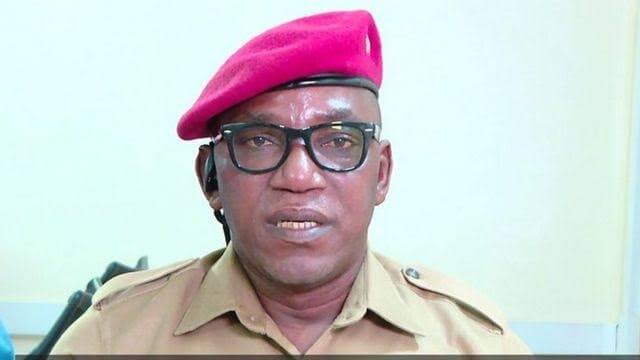
Former Minister of Sports, Solomon Dalung, has opened up about a surprising and thought-provoking conversation he once had with a young man who claimed to be living in the bush as a bandit. Dalung shared the experience during an interview with News Central, explaining how the encounter gave him a deeper understanding of the issues fueling insecurity……CONTINUE READING

According to Dalung, he was browsing TikTok when he came across the young man, who openly described himself as someone living in the forest due to ongoing conflict. Curious, Dalung asked why they engaged in violent activities. The young man responded that they had suffered losses themselves and felt targeted by vigilante groups who, according to him, harmed their people and took their cattle. This, he said, pushed them into retaliation and led them deeper into the bush.

Dalung explained that he challenged the young man, pointing out that innocent people—including other Fulani individuals—were being harmed in the process. The young man replied that, from their viewpoint, only those living in the bush were considered part of their community, while anyone living in town was seen differently. It was a response that, according to Dalung, revealed how distorted perceptions can worsen the cycle of conflict.

Wanting to know if there was any path toward peace, Dalung asked what could help end the violence. The young man shared that they were open to negotiation and discussions that could encourage them to give up their weapons and reintegrate into society. Dalung noted that the confidence with which the young man spoke was unsettling, but it also showed that dialogue could be part of the solution.

Reflecting on the experience, Dalung urged the National Assembly to consider constitutional changes that would allow Nigerians the legal right to defend themselves responsibly, especially in areas affected by insecurity.

His conversation serves as a reminder of how complex the nation’s security challenges are—and how personal engagement, understanding, and strategic dialogue may help chart a way forward.

Continue Reading

Trending