Connect with us

Crime

Benue’s Bleeding Heart: Inside The Yelewata Massacre And The Search For Justice

Published

on

Benue’s Bleeding Heart: Inside The Yelewata Massacre And The Search For Justice

When night falls in Nigeria’s Middle Belt, too often it brings with it the echo of gunfire, the crackle of burning homes, and the silent grief of families shattered. The recent massacre in Yelewata, a village nestled in Guma Local Government Area of Benue State, is yet another tragic entry in a long, bloody saga of violence that seems to have no end in sight.

On the night of Friday, June 13, 2025, armed assailants stormed the village in a coordinated, ruthless attack that left over 200 people dead, according to local and international reports. As dawn broke, the full horror emerged — smoldering homes, displaced families, and shallow graves. Amnesty International called it a “terrible massacre.” Pope Francis mentioned it during his Sunday Angelus, praying for the victims of the “senseless violence.”

Now, Nigeria’s top security chiefs are on the ground. But the question remains: Is this justice arriving too late?


🔥 A Pattern of Bloodshed

This is far from an isolated incident. Benue State has long been ground zero in the simmering, often explosive conflict between nomadic herders and sedentary farmers — a clash driven by dwindling land, climate change, ethnic tension, and political neglect.

Yelewata, tragically, is a familiar name in Nigeria’s grim record of mass killings. The latest attack is one of the deadliest in recent memory, and it occurred just as the rainy season begins — a time of year when competition over fertile land is most intense.

Many of those killed were internally displaced persons (IDPs) who had already fled previous violence. In a cruel twist of fate, they sought safety in Yelewata only to meet a more brutal end.


🛡️ The Military’s New Tone — But Will It Be Enough?

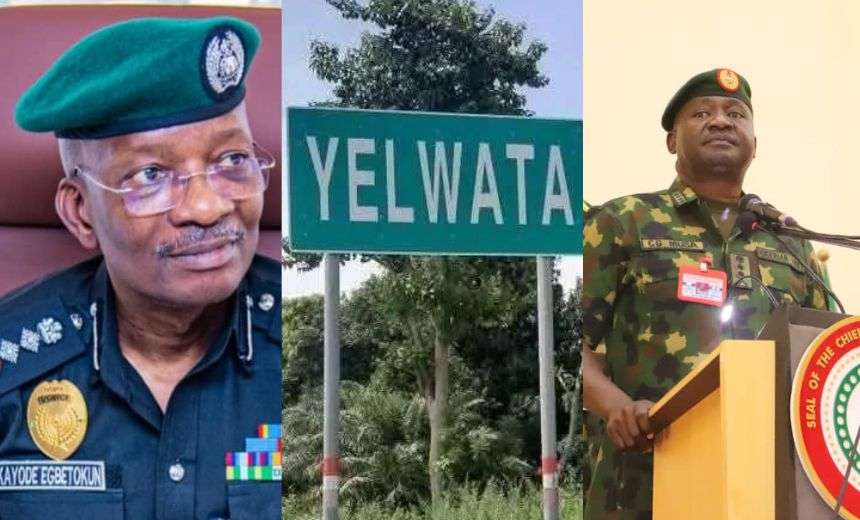
Chief of Defence Staff General Christopher Musa and Inspector-General of Police Kayode Egbetokun arrived in Makurdi and Yelewata within days, promising a “cross-border manhunt” for the attackers. Musa vowed to “take the battle to them” — a break from the often reactive posture security forces have taken in the past.

But his statement carried a deeper undertone: the attackers may have had help from within. This chilling revelation hints at a more insidious layer — local collaborators possibly feeding information to those who came with fire and fury.

“We cannot do it alone without the community,” Musa admitted. It was a call for both trust and vigilance — and an acknowledgment that in conflict zones like Benue, peacekeeping can’t happen without intelligence from the ground up.


🧭 The Challenge of Porous Borders

General Musa didn’t mince words about another key factor: Nigeria’s porous internal borders, particularly between Benue and Nasarawa states. These open borders allow for near-unguarded movement of armed groups, making law enforcement a logistical nightmare.

The military is now engaging with Nasarawa authorities in what could become a critical joint-security operation. But skepticism lingers. For many rural Nigerians, these promises feel like déjà vu — a cycle of outrage, response, and forgetfulness that repeats every time bodies are buried.


🗣️ What’s at Stake?

The death toll may dominate headlines, but the deeper crisis is structural: failing security architecture, underfunded emergency response systems, and an ever-widening trust gap between communities and those sworn to protect them.

And then there’s the psychological toll. Young people growing up in these regions now associate rain not just with planting season — but with bloodshed. Whole generations are being shaped by fear, displacement, and trauma.

It’s no longer just about farmer versus herder. It’s about a state struggling to assert its legitimacy, and a people losing faith in their country’s promise of protection.


🌍 What Needs to Happen Next?

For meaningful change, Nigeria must:

  • Strengthen community-based intelligence systems.

  • Address rural underdevelopment and land use conflicts through policy reforms.

  • Crack down on internal collusion and corruption within the military and police.

  • Support survivors, especially IDPs, with trauma care, shelter, and justice mechanisms.

And perhaps most importantly, there needs to be a shift from reaction to prevention. Villages like Yelewata should not have to burn before the alarm bells ring.


🕊️ Final Thoughts

Benue bleeds again — and Nigeria watches, prays, and moves on. But if there’s any hope of turning the tide, it lies in sustained attention, political will, and collective action.

The killers of Yelewata may still be out there, but so is the opportunity for Nigeria to reclaim the sanctity of life. The land deserves better. The people deserve better.

And silence is no longer an option.

Continue Reading
Click to comment

Leave a Reply

Your email address will not be published. Required fields are marked *

Crime

Fresh Wave Of Insecurity: Pregnant Woman And Several Residents Abducted In Niger And FCT

Published

on

Continue Reading

Crime

Dalung Breaks Silence: TikTok Chat With Bandit Exposes Deep Secrets Behind The Violence

Published

on

Dalung Breaks Silence: TikTok Chat With Bandit Exposes Deep Secrets Behind The Violence

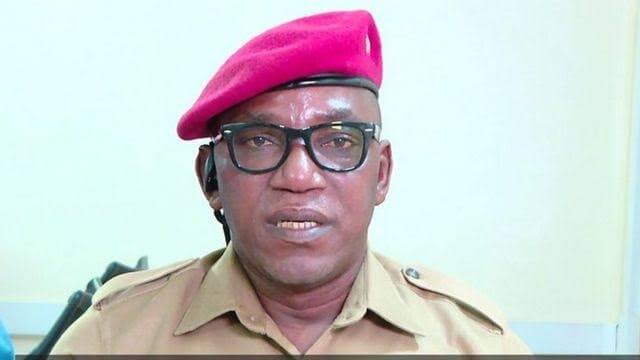
Former Minister of Sports, Solomon Dalung, has opened up about a surprising and thought-provoking conversation he once had with a young man who claimed to be living in the bush as a bandit. Dalung shared the experience during an interview with News Central, explaining how the encounter gave him a deeper understanding of the issues fueling insecurity……CONTINUE READING

According to Dalung, he was browsing TikTok when he came across the young man, who openly described himself as someone living in the forest due to ongoing conflict. Curious, Dalung asked why they engaged in violent activities. The young man responded that they had suffered losses themselves and felt targeted by vigilante groups who, according to him, harmed their people and took their cattle. This, he said, pushed them into retaliation and led them deeper into the bush.

Dalung explained that he challenged the young man, pointing out that innocent people—including other Fulani individuals—were being harmed in the process. The young man replied that, from their viewpoint, only those living in the bush were considered part of their community, while anyone living in town was seen differently. It was a response that, according to Dalung, revealed how distorted perceptions can worsen the cycle of conflict.

Wanting to know if there was any path toward peace, Dalung asked what could help end the violence. The young man shared that they were open to negotiation and discussions that could encourage them to give up their weapons and reintegrate into society. Dalung noted that the confidence with which the young man spoke was unsettling, but it also showed that dialogue could be part of the solution.

Reflecting on the experience, Dalung urged the National Assembly to consider constitutional changes that would allow Nigerians the legal right to defend themselves responsibly, especially in areas affected by insecurity.

His conversation serves as a reminder of how complex the nation’s security challenges are—and how personal engagement, understanding, and strategic dialogue may help chart a way forward.

Continue Reading

Crime

BREAKING: EFCC Drags Ex-Justice Minister Malami—What He Said Will Shock You

Published

on

BREAKING: EFCC Drags Ex-Justice Minister Malami—What He Said Will Shock You

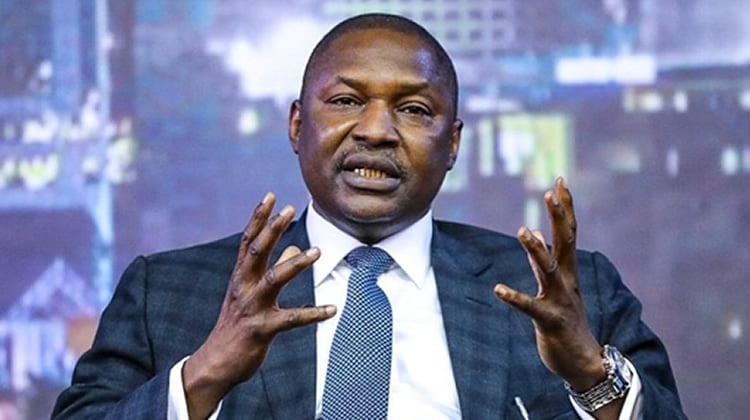
Nigeria’s former Attorney-General of the Federation and Minister of Justice, Abubakar Malami (SAN), has confirmed that the Economic and Financial Crimes Commission (EFCC) has officially summoned him—sending shockwaves across the nation’s political landscape…….CONTINUE READING

Malami, who served from 2015 to 2023 under ex-President Muhammadu Buhari, broke the news himself in a bold announcement on his social media page, declaring that he is ready to face investigators head-on.

The once-powerful justice minister, known for steering some of the country’s most controversial legal battles—from massive asset recovery operations to heated anti-corruption reforms—now finds himself at the centre of a fresh probe.
Throughout his tenure, Malami was linked to numerous high-stakes decisions, arbitration wars, and sensitive financial crime cases that kept him in the public eye.

In recent years, however, scrutiny tightened around issues such as asset declarations and management of recovered funds—allegations he has firmly and repeatedly rejected.

For now, the EFCC remains tight-lipped, refusing to disclose what exactly Malami is being called in for, leaving the public buzzing with speculation.

In a confident statement on Facebook, Malami wrote:

“This is to confirm that I have been invited by the EFCC.
As a law-abiding and patriotic citizen, I reaffirm my commitment to honour the invitation.
I understand the spirit of accountability and transparency in public service—principles I have always advocated.
I am committed to sharing developments with the Nigerian public as they unfold.”

With Malami’s pledge to keep Nigerians updated, all eyes are now fixed on the unfolding drama—a saga that promises to shake up the nation’s justice and political corridors once again.

Continue Reading

Trending