Connect with us

Latest

Atiku Abubakar Lists Nine Conditions Tinubu’s Government Must Meet Before 2027 Elections

Published

on

Atiku Abubakar Lists Nine Conditions Tinubu’s Government Must Meet Before 2027 Elections

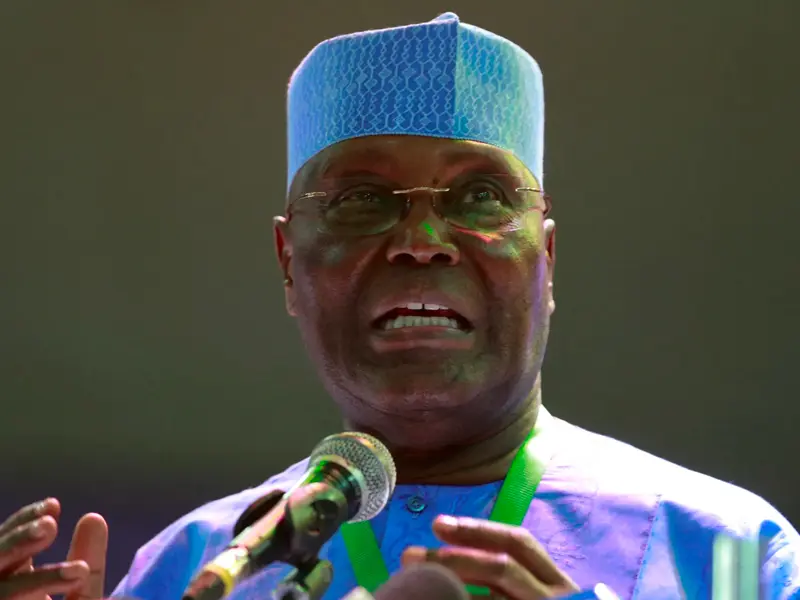
As Nigeria edges closer to the 2027 general elections, the debate over the credibility of its democratic process has resurfaced with renewed urgency. Former Vice President Atiku Abubakar has raised the stakes, unveiling a set of nine conditions he insists must be met by the Bola Tinubu-led administration if the country is to restore public trust in elections and safeguard democracy.

Atiku, the Peoples Democratic Party (PDP) candidate in the 2023 elections, issued his statement via X (formerly Twitter) on Thursday, drawing attention to what he described as systemic flaws that continue to undermine electoral credibility.

The Warning Signs: Low Voter Turnout and Judicial Overreach

Citing data from the Independent National Electoral Commission (INEC), Atiku reminded Nigerians that the 2023 general elections produced the lowest voter turnout since 1999. Out of 93.47 million registered voters, only 24.9 million turned up at the polls—just 26.72%.

“This level of voter apathy should concern everyone,” he warned, noting that many citizens increasingly view elections as predetermined rather than competitive.

Atiku further echoed concerns raised by legal scholar Prof. Chidi Odinkalu in his recent book, The Selectorate. The book argues that Nigeria’s electoral disputes are no longer settled by the people’s votes but by panels of judges who often determine the final outcome of elections.

“This is not sustainable,” Atiku stated. “Democracy cannot thrive where the courts, rather than the voters, ultimately decide who governs.”

The Nine Conditions

Atiku outlined nine sweeping reforms, which he believes must be institutionalized before 2027 if Nigeria is to hold credible elections:

  1. Mandatory use of BVAS (Bimodal Voter Accreditation System) for accreditation and upload of results at all polling and collation centres.

  2. Electronic transmission of results to the INEC Result Viewing (iREV) portal, with no discretion for manual transmission.

  3. Ward-level collation of results strictly based on electronically transmitted figures.

  4. Local government-level collation based solely on ward-level electronic results.

  5. State-level collation to reflect electronically transmitted local government results.

  6. National-level collation strictly tied to electronically transmitted state results.

  7. A complete ban on manual accreditation, transmission, and collation at all levels.

  8. Democratization of INEC appointments, including the INEC Chairman, National Commissioners, and Resident Electoral Commissioners, by subjecting them to open democratic voting rather than presidential nomination.

  9. Shifting the burden of proof in election petitions to INEC, compelling the commission to demonstrate “substantial compliance” with the Electoral Act and the Constitution.

Atiku maintains that these reforms would not only strengthen transparency but also restore voter confidence by removing opportunities for manipulation.

Context: Why These Reforms Matter

Nigeria has struggled with election credibility for decades. From allegations of ballot snatching in the 2007 elections to the controversies surrounding the 2019 and 2023 polls, each cycle has deepened mistrust.

International observers, including the European Union Election Observation Mission (EU EOM) and the U.S.-based Carter Center, have repeatedly urged Nigeria to adopt clearer, technology-driven measures to improve transparency. In its final report on the 2023 elections, the EU EOM criticized inconsistent use of technology and lack of accountability as major flaws that marred the process.

Atiku’s proposed reforms align with global best practices. Countries like Kenya and Ghana have also integrated biometric verification and electronic transmission systems into their electoral processes, significantly reducing disputes and instances of fraud.

The Bigger Picture: A Struggle for Democratic Legitimacy

Analysts argue that Atiku’s conditions go beyond technical reforms; they represent a broader struggle for democratic legitimacy in Africa’s largest democracy.

Dr. Ayisha Osori, governance expert and author of Love Does Not Win Elections, has long argued that Nigeria’s electoral system is structured in a way that favors incumbents and entrenched political elites. Without reforms, she notes, ordinary Nigerians may continue to feel disenfranchised.

The challenge, however, lies in political will. While Tinubu’s administration has publicly promised to strengthen democracy, critics point out that ruling parties often resist electoral reforms that might reduce their control over the process.

Global Resonance: Lessons from Other Democracies

Globally, debates over electoral credibility are not unique to Nigeria. In the United States, disputes over the 2020 presidential elections revealed the dangers of misinformation and weak institutional safeguards. In Kenya, the Supreme Court has played a decisive role in ensuring credible elections by invalidating flawed processes and compelling reforms.

For Nigeria, the lesson is clear: credibility cannot be left to chance. Building a transparent and accountable system is key to ensuring that power truly resides with the people.

What This Means for 2027

With less than three years to the next presidential election, the timeline for implementing Atiku’s nine conditions is tight. Electoral reforms typically require amendments to existing laws, political consensus, and logistical readiness by INEC.

If Tinubu’s government ignores these calls, Atiku warns, Nigeria risks further eroding public trust, leading to even lower voter turnout and potentially destabilizing post-election disputes.

For millions of Nigerians at home and in the diaspora, who remain emotionally invested in the country’s democratic future, the stakes could not be higher.

Conclusion

Atiku Abubakar’s intervention reopens a crucial national conversation about the future of Nigeria’s democracy. His nine conditions may be ambitious, but they reflect the frustrations of many citizens who feel excluded from the political process.

As Africa’s most populous nation, Nigeria’s democratic health has continental and global implications. A credible 2027 election would not only reaffirm Nigeria’s role as a leader in Africa but also reassure investors, international partners, and its diaspora community that democratic governance in the country is on the right path.

Whether President Tinubu’s government embraces these reforms will determine if Nigeria can move beyond the shadows of judicially decided elections and reclaim the principle that sovereignty truly belongs to the people.

Continue Reading
Click to comment

Leave a Reply

Your email address will not be published. Required fields are marked *

Crime

Fresh Wave Of Insecurity: Pregnant Woman And Several Residents Abducted In Niger And FCT

Published

on

Continue Reading

Crime

Dalung Breaks Silence: TikTok Chat With Bandit Exposes Deep Secrets Behind The Violence

Published

on

Dalung Breaks Silence: TikTok Chat With Bandit Exposes Deep Secrets Behind The Violence

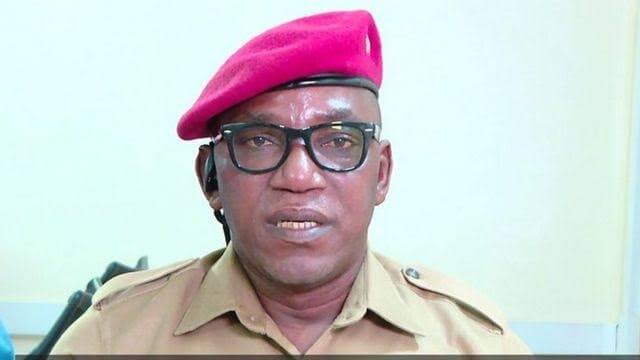
Former Minister of Sports, Solomon Dalung, has opened up about a surprising and thought-provoking conversation he once had with a young man who claimed to be living in the bush as a bandit. Dalung shared the experience during an interview with News Central, explaining how the encounter gave him a deeper understanding of the issues fueling insecurity……CONTINUE READING

According to Dalung, he was browsing TikTok when he came across the young man, who openly described himself as someone living in the forest due to ongoing conflict. Curious, Dalung asked why they engaged in violent activities. The young man responded that they had suffered losses themselves and felt targeted by vigilante groups who, according to him, harmed their people and took their cattle. This, he said, pushed them into retaliation and led them deeper into the bush.

Dalung explained that he challenged the young man, pointing out that innocent people—including other Fulani individuals—were being harmed in the process. The young man replied that, from their viewpoint, only those living in the bush were considered part of their community, while anyone living in town was seen differently. It was a response that, according to Dalung, revealed how distorted perceptions can worsen the cycle of conflict.

Wanting to know if there was any path toward peace, Dalung asked what could help end the violence. The young man shared that they were open to negotiation and discussions that could encourage them to give up their weapons and reintegrate into society. Dalung noted that the confidence with which the young man spoke was unsettling, but it also showed that dialogue could be part of the solution.

Reflecting on the experience, Dalung urged the National Assembly to consider constitutional changes that would allow Nigerians the legal right to defend themselves responsibly, especially in areas affected by insecurity.

His conversation serves as a reminder of how complex the nation’s security challenges are—and how personal engagement, understanding, and strategic dialogue may help chart a way forward.

Continue Reading

Latest

Oyo State: Millions Lost As Fire Damages Two Residential Buildings In Ibadan And Kishi

Published

on

Oyo State: Millions Lost As Fire Damages Two Residential Buildings In Ibadan And Kishi

Oyo State

Two separate fire incidents have destroyed properties worth millions of naira in Oyo State, affecting residential buildings in both Ibadan and Kishi on Wednesday night…..CONTINUE READING

The first incident occurred at 17 Prestige Estate, Joop Bad Hour Crescent, Onirele, Ibadan, where the living room of a four-bedroom duplex was severely damaged. Although the fire consumed valuable household items, no injuries or loss of life were recorded.

In Kishi town, a second fire broke out at 1 Alhaji Rosco Street, Ajangba Area, where the generator room of another four-bedroom residence was engulfed. The blaze also affected property worth millions of naira before firefighters arrived.

Chairman of the Oyo State Fire Service, Hon. Maroof Akinwande, confirmed both incidents on Friday. He praised the swift response of fire officers, noting that their timely intervention prevented the flames from spreading to other parts of the buildings.

According to Akinwande:

“When we arrived, the living room of the duplex was already on fire. Our officers launched a prompt and coordinated attack, preventing the fire from spreading further. No casualty was recorded, and properties worth millions were saved. The cause of the incident is still under investigation.”

He added that the Kishi incident was also contained quickly:

“Upon arrival, we discovered the generator room was completely engulfed. Our firemen acted immediately and stopped the fire from reaching the main building. It was fully extinguished in record time.”

The Oyo State Fire Service has urged residents to prioritize safety measures, maintain electrical and generator installations, and report emergencies promptly to reduce losses.

Continue Reading

Trending