Connect with us

Latest

Xenophobia Is Killing Africa’s Future – Malema Explodes At Nigeria Conference

Published

on

Xenophobia Is Killing Africa’s Future – Malema Explodes At Nigeria Conference

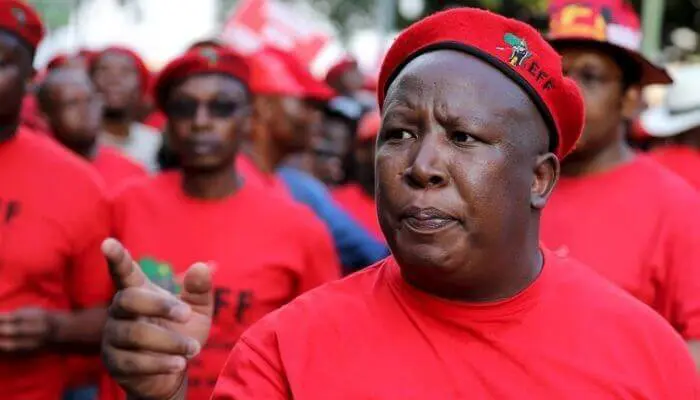
The President of South Africa’s Economic Freedom Fighters (EFF), Julius Malema, has condemned xenophobia in Africa, describing it as a betrayal of the continent’s quest for unity and development.

Speaking on Sunday at the Nigerian Bar Association (NBA) Annual General Conference in Enugu, Nigeria, Malema linked rising xenophobic attacks in South Africa and other parts of the continent to poverty, inequality, and government failures, rather than the presence of foreign nationals.

“Xenophobia is a betrayal of African unity. It is a sickness borne of poverty, inequality, and government failure. Its victims are our African brothers and sisters. Nigerians, Zimbabweans, Congolese, and Somalis are not the cause of South Africa’s unemployment crisis,” Malema said.

He argued that the roots of the problem lie in South Africa’s structural inequalities, where wealth remains concentrated in the hands of a white minority and multinational corporations. According to him, this system continues to exploit workers while failing to industrialize the economy.

“Instead, they divert anger from the real enemy,” he added, “and we must educate our people that unity, not division, is the solution to Africa’s crisis.”


Pan-African Ties Between South Africa and Nigeria

Malema underscored the need for stronger ties between South Africa and Nigeria, Africa’s two biggest economies. He reminded the audience that South African companies such as MTN, Shoprite, and Multichoice have created thousands of jobs and provided services in Nigeria, while Nigerian businesses and investors have expanded into South Africa’s banking, oil, and creative industries.

He further noted that Nigerian culture — through Afrobeats, Nollywood films, and literature — has significantly influenced South African society. Likewise, South African universities, sports, and industries continue to provide platforms for Nigerian talent.

“The economic strength of Nigeria and South Africa can power a new African industrial revolution,” Malema declared. “Our entrepreneurs should set up in Lagos without suspicion, but with support as partners in a shared future.”


Xenophobia: A Recurring Challenge

Xenophobic violence in South Africa has been a recurring issue for over two decades, with major flare-ups recorded in 2008, 2015, and 2019. Foreign-owned businesses, particularly those run by Nigerians, Zimbabweans, and Somalis, have often been targeted, leading to loss of lives and destruction of property.

In 2019, violent attacks in Johannesburg and Pretoria sparked diplomatic tensions between Nigeria and South Africa. Nigeria temporarily evacuated hundreds of its citizens, and several African governments condemned the attacks.

According to Amnesty International, xenophobic violence stems from “a toxic combination of social inequality, poor service delivery, and inflammatory political rhetoric.” The organization has consistently urged South African authorities to do more to protect migrants and address root causes.

The United Nations High Commissioner for Refugees (UNHCR) has also raised concerns about attacks on asylum seekers and refugees in South Africa, noting that the country hosts more than 250,000 recognized refugees and asylum seekers, mainly from other African nations.


African Unity Under Threat

Malema’s comments resonate with the ideals of Pan-Africanism, a political and cultural movement that advocates for solidarity among African nations. He warned that xenophobia undermines the African Continental Free Trade Area (AfCFTA), which came into effect in 2021, and aims to boost intra-African trade by removing barriers and allowing free movement of goods, services, and people.

Analysts argue that without addressing xenophobia, AfCFTA’s vision of a borderless Africa where economies grow collectively will remain a dream.

Professor Adekeye Adebajo, Director of the Institute for Pan-African Thought and Conversation in Johannesburg, recently noted that “Nigeria and South Africa must lead by example in promoting African integration. If the two largest economies cannot work together, the entire continent suffers.”


Political Undertones

Malema, known for his radical rhetoric and socialist leanings, has positioned himself as a Pan-African voice within South Africa’s political landscape. His EFF party is often seen as a challenger to the ruling African National Congress (ANC), particularly among young and economically disenfranchised South Africans.

By addressing xenophobia in Nigeria, Malema may also be signaling his intention to build alliances across the continent ahead of South Africa’s 2026 general elections. His message suggests that solidarity, rather than nationalism, is the path forward for Africa.


Call for Collective Action

Observers believe Malema’s remarks are timely as Africa grapples with unemployment, migration pressures, and political instability in regions like the Sahel, Horn of Africa, and Central Africa.

Dr. Funmi Olonisakin, Vice-President of International Engagement at King’s College London, argues that African governments must prioritize youth empowerment, skills development, and industrialization to reduce the socioeconomic triggers of xenophobia.

She adds: “Africans must see one another as partners, not competitors. If leaders fail to address inequality and provide opportunities, xenophobic violence will only worsen.”


Media and Public Reactions

Malema’s speech has already gained traction on social media platforms, with many Nigerians and South Africans applauding his stance. Some, however, remain skeptical, arguing that rhetoric alone will not solve the deep-rooted frustrations that fuel xenophobia.

Civil society groups have called on both the South African and Nigerian governments to initiate joint youth exchange programs, business partnerships, and cultural collaborations that can promote trust and understanding between the two nations.


Conclusion

Julius Malema’s call for an end to xenophobia has re-ignited debate about the future of African unity. His message — that poverty and inequality, not migrants, are the real causes of social unrest — challenges governments to address structural problems rather than scapegoat foreign nationals.

As Nigeria and South Africa continue to shape the continent’s economic and cultural trajectory, their ability to overcome xenophobia and embrace Pan-African solidarity could determine whether Africa achieves its long-promised industrial revolution.

Continue Reading
Click to comment

Leave a Reply

Your email address will not be published. Required fields are marked *

Crime

Fresh Wave Of Insecurity: Pregnant Woman And Several Residents Abducted In Niger And FCT

Published

on

Continue Reading

Crime

Dalung Breaks Silence: TikTok Chat With Bandit Exposes Deep Secrets Behind The Violence

Published

on

Dalung Breaks Silence: TikTok Chat With Bandit Exposes Deep Secrets Behind The Violence

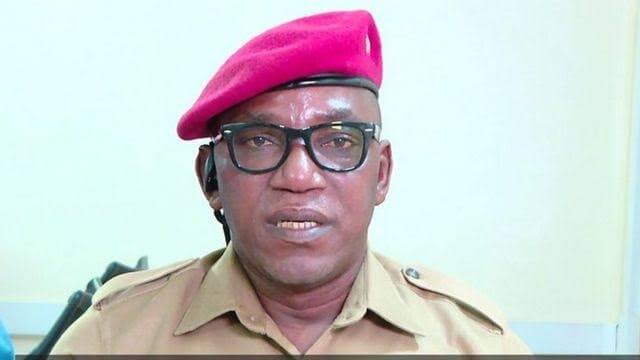
Former Minister of Sports, Solomon Dalung, has opened up about a surprising and thought-provoking conversation he once had with a young man who claimed to be living in the bush as a bandit. Dalung shared the experience during an interview with News Central, explaining how the encounter gave him a deeper understanding of the issues fueling insecurity……CONTINUE READING

According to Dalung, he was browsing TikTok when he came across the young man, who openly described himself as someone living in the forest due to ongoing conflict. Curious, Dalung asked why they engaged in violent activities. The young man responded that they had suffered losses themselves and felt targeted by vigilante groups who, according to him, harmed their people and took their cattle. This, he said, pushed them into retaliation and led them deeper into the bush.

Dalung explained that he challenged the young man, pointing out that innocent people—including other Fulani individuals—were being harmed in the process. The young man replied that, from their viewpoint, only those living in the bush were considered part of their community, while anyone living in town was seen differently. It was a response that, according to Dalung, revealed how distorted perceptions can worsen the cycle of conflict.

Wanting to know if there was any path toward peace, Dalung asked what could help end the violence. The young man shared that they were open to negotiation and discussions that could encourage them to give up their weapons and reintegrate into society. Dalung noted that the confidence with which the young man spoke was unsettling, but it also showed that dialogue could be part of the solution.

Reflecting on the experience, Dalung urged the National Assembly to consider constitutional changes that would allow Nigerians the legal right to defend themselves responsibly, especially in areas affected by insecurity.

His conversation serves as a reminder of how complex the nation’s security challenges are—and how personal engagement, understanding, and strategic dialogue may help chart a way forward.

Continue Reading

Latest

Oyo State: Millions Lost As Fire Damages Two Residential Buildings In Ibadan And Kishi

Published

on

Oyo State: Millions Lost As Fire Damages Two Residential Buildings In Ibadan And Kishi

Oyo State

Two separate fire incidents have destroyed properties worth millions of naira in Oyo State, affecting residential buildings in both Ibadan and Kishi on Wednesday night…..CONTINUE READING

The first incident occurred at 17 Prestige Estate, Joop Bad Hour Crescent, Onirele, Ibadan, where the living room of a four-bedroom duplex was severely damaged. Although the fire consumed valuable household items, no injuries or loss of life were recorded.

In Kishi town, a second fire broke out at 1 Alhaji Rosco Street, Ajangba Area, where the generator room of another four-bedroom residence was engulfed. The blaze also affected property worth millions of naira before firefighters arrived.

Chairman of the Oyo State Fire Service, Hon. Maroof Akinwande, confirmed both incidents on Friday. He praised the swift response of fire officers, noting that their timely intervention prevented the flames from spreading to other parts of the buildings.

According to Akinwande:

“When we arrived, the living room of the duplex was already on fire. Our officers launched a prompt and coordinated attack, preventing the fire from spreading further. No casualty was recorded, and properties worth millions were saved. The cause of the incident is still under investigation.”

He added that the Kishi incident was also contained quickly:

“Upon arrival, we discovered the generator room was completely engulfed. Our firemen acted immediately and stopped the fire from reaching the main building. It was fully extinguished in record time.”

The Oyo State Fire Service has urged residents to prioritize safety measures, maintain electrical and generator installations, and report emergencies promptly to reduce losses.

Continue Reading

Trending