


Connect with us

Crime

“He Was Just Buying Food”: Inside Nigeria’s Deadly Cultism Epidemic

Published

on

“He Was Just Buying Food”: Inside Nigeria’s Deadly Cultism Epidemic

It was an ordinary night in Mushin, Lagos. Twelve-year-old Wasiu left home with a few naira to buy dinner from a roadside food vendor. Minutes later, gunfire ripped through the air as rival cult groups clashed. Wasiu was hit by a stray bullet. He never made it back home.

Sadly, Wasiu’s story is not unique. Across Nigeria, a hidden war is raging in neighborhoods, schools, and communities — a war not formally declared but devastating in its scale. Cultism and street violence have claimed more than 1,680 lives between January 2021 and June 2024, according to SBM Intelligence. The victims are not only cult members. They are children, mothers, students, traders — everyday Nigerians.


The Bloody Reality: When Innocence Meets Gunfire

Street violence in Nigeria has escalated from isolated campus cult fights to full-blown community sieges.

  • Lagos: Wasiu’s death in Mushin illustrates how ordinary lives are cut short without warning.

  • Ondo: A mother and her infant were gunned down in Owo during a morning clash.

  • Anambra: Thirteen people were killed during a New Yam Festival, turning a cultural celebration into a massacre.

These tragedies are not outliers. They are symptoms of a systemic problem — one that grows deadlier each year.


Why Cultism Thrives in Nigeria

Experts say cultism today is not confined to schools. Instead, it has spilled into the streets, fueled by:

  • Poverty and Unemployment – Idle youths, desperate for survival and identity, are recruited.

  • Peer Pressure and Social Belonging – Many join out of fear of exclusion or bullying.

  • Political Exploitation – Politicians arm gangs during elections, leaving weapons and networks intact after polls.

  • Weak Justice System – Arrested suspects often walk free, emboldening others.

Dr. Kevin Akan, a criminologist, notes that while campus cultism has declined, street violence is now the greater threat, driven by economics and politics.


The Human Cost: Families in Agony

Behind every statistic is a grieving family.

  • Mr. Synclair, whose 21-year-old son was hacked to death in Bayelsa, still questions how neighbors watched but did nothing.

  • Alfred Thomas lost his son, a graduate on the verge of national service. Suspects were arrested but later released — one, reportedly the son of a judge.

These fathers are left with shattered dreams, unresolved grief, and zero justice.

Psychologists warn that beyond death, survivors suffer trauma, depression, PTSD, and prolonged grief, destabilizing families and entire communities.


Economic Impact: A Billion-Dollar Loss

It’s not just lives being lost — it’s livelihoods. Edo State Governor Monday Okpebholo revealed that cultism costs the state over $1 billion annually in lost investments. Businesses shut down, tourism stalls, and locals flee unsafe neighborhoods. Cult violence has become both a humanitarian and economic crisis.


Government Response: Not Enough?

Efforts include police crackdowns, amnesty programs, and community sensitization campaigns. In Ogun State, 48 cultists surrendered during an amnesty drive. Edo State has backed aggressive police action.

But these measures remain reactive. Experts argue that without systemic reforms, cultism will persist.


The Way Forward: Breaking the Cycle of Blood

To truly curb cultism, Nigeria must go beyond arrests:

  • Stricter laws with real enforcement — ending impunity.

  • Youth empowerment and job creation — offering alternatives to violence.

  • Stronger parenting and moral education — reshaping values.

  • Community accountability — ending protection of cultists by local leaders.

  • Criminal justice reform — ensuring suspects face fair but firm prosecution.

As Dr. Akan emphasizes, “Making laws without enforcement is mere advice.” The fight requires social reorientation and systemic change.


Conclusion: A War Nigeria Can No Longer Ignore

Nigeria’s cultism epidemic is not just a crime issue — it is a national emergency. Every stray bullet that takes an innocent life erodes public trust, cripples the economy, and deepens fear.

The question is: How many more Wasius, Ayakpos, and Direalas must die before Nigeria confronts this plague head-on?

Until government, communities, and citizens unite to end this scourge, the sound of gunfire may continue to replace the laughter of Nigeria’s children.

Crime

Fresh Wave Of Insecurity: Pregnant Woman And Several Residents Abducted In Niger And FCT

Published

on

Continue Reading

Crime

Dalung Breaks Silence: TikTok Chat With Bandit Exposes Deep Secrets Behind The Violence

Published

on

Dalung Breaks Silence: TikTok Chat With Bandit Exposes Deep Secrets Behind The Violence

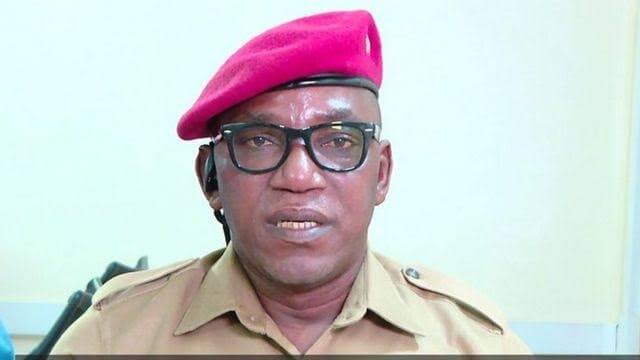
Former Minister of Sports, Solomon Dalung, has opened up about a surprising and thought-provoking conversation he once had with a young man who claimed to be living in the bush as a bandit. Dalung shared the experience during an interview with News Central, explaining how the encounter gave him a deeper understanding of the issues fueling insecurity……CONTINUE READING

According to Dalung, he was browsing TikTok when he came across the young man, who openly described himself as someone living in the forest due to ongoing conflict. Curious, Dalung asked why they engaged in violent activities. The young man responded that they had suffered losses themselves and felt targeted by vigilante groups who, according to him, harmed their people and took their cattle. This, he said, pushed them into retaliation and led them deeper into the bush.

Dalung explained that he challenged the young man, pointing out that innocent people—including other Fulani individuals—were being harmed in the process. The young man replied that, from their viewpoint, only those living in the bush were considered part of their community, while anyone living in town was seen differently. It was a response that, according to Dalung, revealed how distorted perceptions can worsen the cycle of conflict.

Wanting to know if there was any path toward peace, Dalung asked what could help end the violence. The young man shared that they were open to negotiation and discussions that could encourage them to give up their weapons and reintegrate into society. Dalung noted that the confidence with which the young man spoke was unsettling, but it also showed that dialogue could be part of the solution.

Reflecting on the experience, Dalung urged the National Assembly to consider constitutional changes that would allow Nigerians the legal right to defend themselves responsibly, especially in areas affected by insecurity.

His conversation serves as a reminder of how complex the nation’s security challenges are—and how personal engagement, understanding, and strategic dialogue may help chart a way forward.

Continue Reading

Crime

BREAKING: EFCC Drags Ex-Justice Minister Malami—What He Said Will Shock You

Published

on

BREAKING: EFCC Drags Ex-Justice Minister Malami—What He Said Will Shock You

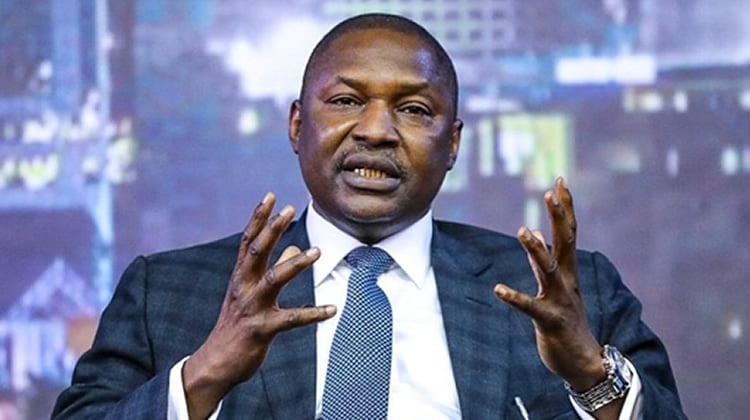
Nigeria’s former Attorney-General of the Federation and Minister of Justice, Abubakar Malami (SAN), has confirmed that the Economic and Financial Crimes Commission (EFCC) has officially summoned him—sending shockwaves across the nation’s political landscape…….CONTINUE READING

Malami, who served from 2015 to 2023 under ex-President Muhammadu Buhari, broke the news himself in a bold announcement on his social media page, declaring that he is ready to face investigators head-on.

The once-powerful justice minister, known for steering some of the country’s most controversial legal battles—from massive asset recovery operations to heated anti-corruption reforms—now finds himself at the centre of a fresh probe.
Throughout his tenure, Malami was linked to numerous high-stakes decisions, arbitration wars, and sensitive financial crime cases that kept him in the public eye.

In recent years, however, scrutiny tightened around issues such as asset declarations and management of recovered funds—allegations he has firmly and repeatedly rejected.

For now, the EFCC remains tight-lipped, refusing to disclose what exactly Malami is being called in for, leaving the public buzzing with speculation.

In a confident statement on Facebook, Malami wrote:

“This is to confirm that I have been invited by the EFCC.
As a law-abiding and patriotic citizen, I reaffirm my commitment to honour the invitation.
I understand the spirit of accountability and transparency in public service—principles I have always advocated.
I am committed to sharing developments with the Nigerian public as they unfold.”

With Malami’s pledge to keep Nigerians updated, all eyes are now fixed on the unfolding drama—a saga that promises to shake up the nation’s justice and political corridors once again.

Continue Reading

Trending