Connect with us

Crime

Abuja In Fear: ‘One-Chance’ Killers Strike Again—Three Women Dead In One Week

Published

on

Abuja In Fear: ‘One-Chance’ Killers Strike Again—Three Women Dead In One Week

“One chance.” Two words that now strike fear into the hearts of Abuja residents.

It’s a term that’s become all too familiar — whispered in taxi queues, discussed in hushed voices at bus stops, and splashed across tragic headlines. It no longer refers to just petty crime. In Nigeria’s Federal Capital Territory (FCT), “one-chance” has become a euphemism for abduction, assault, and even murder.

In the last few weeks, a disturbing spike in these violent incidents has plunged Abuja into a climate of fear. The city, meant to symbolize national unity, governance, and progress, is now grappling with a horrific wave of crimes that most often target young, vulnerable women.


A Deadly Pattern Emerging

It started — or at least escalated — in early July, when 23-year-old Grace Godwin, a petrol station attendant, was found unconscious along a roadside in Jabi. Police rushed her to the National Hospital, but it was too late. Grace was declared dead on arrival — yet another name added to the growing list of “one-chance” victims.

Just days earlier, Freda Arnong, a staff member at the Ghanaian High Commission, suffered a similar fate. She boarded a cab at Transcorp Junction. Instead of taking her home, the vehicle diverted toward Lugbe-Airport Road. Brutalized and thrown out of the moving car, Freda was found and taken to the hospital — where she, too, was pronounced dead.

These aren’t isolated stories. They’re becoming alarmingly frequent. In the same week, a female National Youth Service Corps (NYSC) member was found disoriented and injured near Maitama after a “one-chance” attack. Another woman, found unconscious on the Kubwa–Deidei Road, lies unidentified in the National Hospital’s Trauma ICU, clinging to life.


A System That Fails the Victims

What’s most unsettling isn’t just the violence — it’s the systemic numbness that follows it. Victims or their families report these attacks, only to be met with shrugging indifference or administrative dead ends. There’s trauma, there’s loss, and then there’s the agony of a flawed response mechanism that feels as dangerous as the crime itself.

Even the FCT Police Spokesperson, Josephine Adeh, voiced frustration when pressed by reporters:

“I am tired of answering questions on this ‘one-chance’ incident. We are looking for solutions. If you have any, bring it forth.”

While her candor might be honest, it underscores a more profound concern — is Abuja out of answers?


The Political Weight of Inaction

In May, FCT Minister Nyesom Wike raised alarms over the growing complexity of security challenges in Abuja. Speaking during the budget defense for the FCT’s ₦1.78 trillion estimate, he stated the obvious but crucial point:

“You cannot talk about autonomy in a city where the President resides… Security in Abuja isn’t something we can handle alone.”

But this isn’t just about policy. It’s about people dying — real lives being cut short on the roads we all use daily.

And yet, despite Abuja being home to the President, the National Assembly, foreign embassies, and the DSS headquarters, the streets — particularly for women — feel like a war zone.


Public Outcry: “What Are These Security Operatives Doing?”

The anguish is widespread. A teacher, Mike Divine, lamented:

“What are these security operatives littered everywhere in the FCT doing?”

Ogbonna Joel, still mourning his cousin’s brutal killing by ‘one-chance’ criminals last year, added:

“Her family will be searching just like we did. It’s heartbreaking.”

And Peter Echo captured the urgency many feel:

“The House of Reps should pass a law placing a life sentence on anyone convicted for ‘one-chance’. One of their aides died from this crime. If that’s not enough to spur action, what is?”


Who’s Most at Risk?

The victims of this silent epidemic are overwhelmingly women. The pattern is undeniable: young female professionals, NYSC members, embassy staff — individuals going about their daily lives — becoming targets of unspeakable violence.

And yet, the city carries on. There are no emergency laws, no special task forces publicly dispatched, no national address acknowledging the terror haunting Nigeria’s capital.


Time for Real Solutions — Not Just Statements

Yes, the crimes are hard to track. Yes, “one-chance” criminals are mobile, cunning, and often blend in with legitimate taxi operators. But complacency is not an option.

We need:

  • Digital taxi regulations, where unregistered cabs are restricted from high-traffic zones.

  • Verified, traceable public transport systems, with ID and tracking mechanisms.

  • A public awareness campaign backed by real-time police response channels.

  • A centralized victims’ support desk where those attacked can receive immediate trauma care and legal help.

And most of all, we need accountability — not just from criminals, but from those tasked with protecting us.


Conclusion: Abuja, We Need to Talk

Abuja was meant to be Nigeria’s crown jewel — a symbol of our unity and security. But today, it feels like a city bleeding from a wound no one wants to acknowledge.

“One-chance” isn’t just a crime. It’s a national shame. And until the authorities confront it with the urgency and seriousness it deserves, no one — especially women — can feel truly safe in Nigeria’s capital.

It’s time to stop whispering and start demanding better. For Grace. For Freda. For the unnamed woman in ICU. And for the countless others who may not survive the next ride.

Continue Reading
1 Comment

1 Comment

Leave a Reply

Your email address will not be published. Required fields are marked *

Crime

Fresh Wave Of Insecurity: Pregnant Woman And Several Residents Abducted In Niger And FCT

Published

on

Continue Reading

Crime

Dalung Breaks Silence: TikTok Chat With Bandit Exposes Deep Secrets Behind The Violence

Published

on

Dalung Breaks Silence: TikTok Chat With Bandit Exposes Deep Secrets Behind The Violence

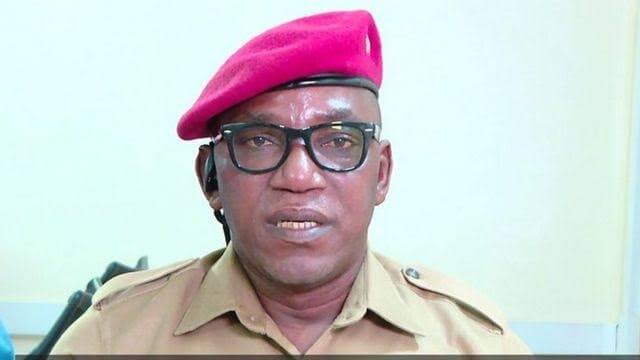
Former Minister of Sports, Solomon Dalung, has opened up about a surprising and thought-provoking conversation he once had with a young man who claimed to be living in the bush as a bandit. Dalung shared the experience during an interview with News Central, explaining how the encounter gave him a deeper understanding of the issues fueling insecurity……CONTINUE READING

According to Dalung, he was browsing TikTok when he came across the young man, who openly described himself as someone living in the forest due to ongoing conflict. Curious, Dalung asked why they engaged in violent activities. The young man responded that they had suffered losses themselves and felt targeted by vigilante groups who, according to him, harmed their people and took their cattle. This, he said, pushed them into retaliation and led them deeper into the bush.

Dalung explained that he challenged the young man, pointing out that innocent people—including other Fulani individuals—were being harmed in the process. The young man replied that, from their viewpoint, only those living in the bush were considered part of their community, while anyone living in town was seen differently. It was a response that, according to Dalung, revealed how distorted perceptions can worsen the cycle of conflict.

Wanting to know if there was any path toward peace, Dalung asked what could help end the violence. The young man shared that they were open to negotiation and discussions that could encourage them to give up their weapons and reintegrate into society. Dalung noted that the confidence with which the young man spoke was unsettling, but it also showed that dialogue could be part of the solution.

Reflecting on the experience, Dalung urged the National Assembly to consider constitutional changes that would allow Nigerians the legal right to defend themselves responsibly, especially in areas affected by insecurity.

His conversation serves as a reminder of how complex the nation’s security challenges are—and how personal engagement, understanding, and strategic dialogue may help chart a way forward.

Continue Reading

Crime

BREAKING: EFCC Drags Ex-Justice Minister Malami—What He Said Will Shock You

Published

on

BREAKING: EFCC Drags Ex-Justice Minister Malami—What He Said Will Shock You

Nigeria’s former Attorney-General of the Federation and Minister of Justice, Abubakar Malami (SAN), has confirmed that the Economic and Financial Crimes Commission (EFCC) has officially summoned him—sending shockwaves across the nation’s political landscape…….CONTINUE READING

Malami, who served from 2015 to 2023 under ex-President Muhammadu Buhari, broke the news himself in a bold announcement on his social media page, declaring that he is ready to face investigators head-on.

The once-powerful justice minister, known for steering some of the country’s most controversial legal battles—from massive asset recovery operations to heated anti-corruption reforms—now finds himself at the centre of a fresh probe.
Throughout his tenure, Malami was linked to numerous high-stakes decisions, arbitration wars, and sensitive financial crime cases that kept him in the public eye.

In recent years, however, scrutiny tightened around issues such as asset declarations and management of recovered funds—allegations he has firmly and repeatedly rejected.

For now, the EFCC remains tight-lipped, refusing to disclose what exactly Malami is being called in for, leaving the public buzzing with speculation.

In a confident statement on Facebook, Malami wrote:

“This is to confirm that I have been invited by the EFCC.
As a law-abiding and patriotic citizen, I reaffirm my commitment to honour the invitation.
I understand the spirit of accountability and transparency in public service—principles I have always advocated.
I am committed to sharing developments with the Nigerian public as they unfold.”

With Malami’s pledge to keep Nigerians updated, all eyes are now fixed on the unfolding drama—a saga that promises to shake up the nation’s justice and political corridors once again.

Continue Reading

Trending