


Connect with us

Crime

They Were Screaming In The Fire’: Survivors Reveal Horror Of Benue Village Slaughter

Published

on

They Were Screaming In The Fire’: Survivors Reveal Horror Of Benue Village Slaughter

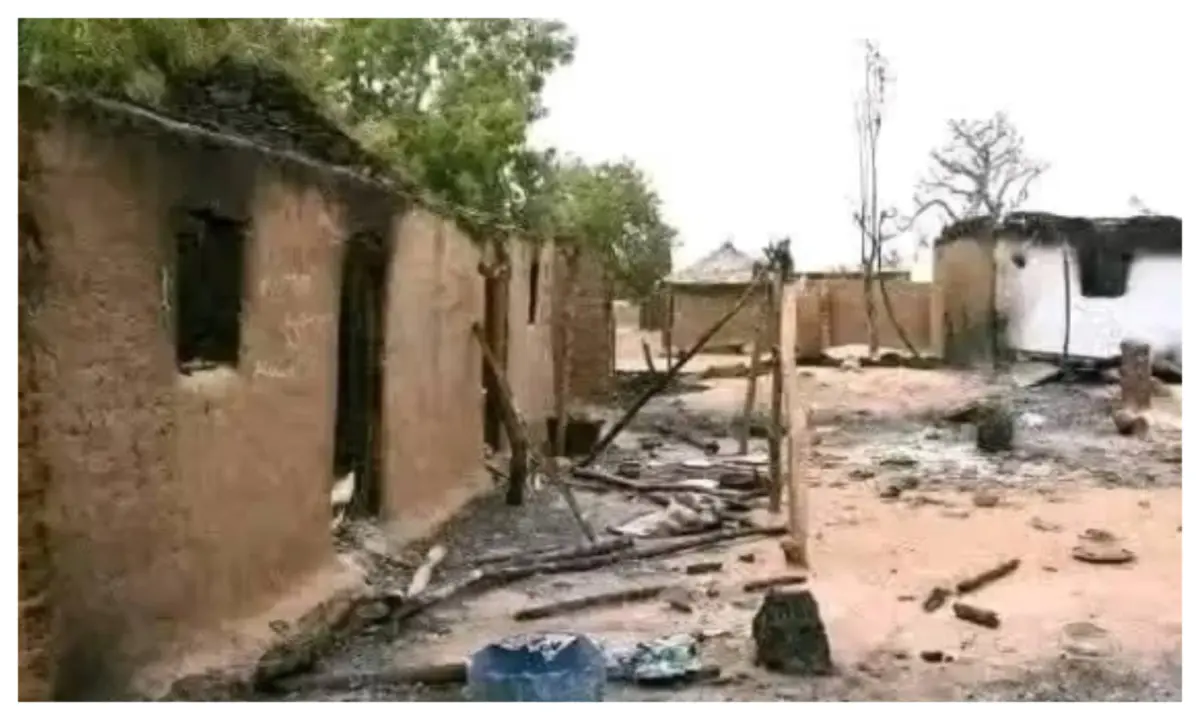
In the early hours of a quiet Saturday morning, tragedy struck again in Nigeria’s Middle Belt. Yelewata, a once-resilient community in Guma Local Government Area of Benue State, was left devastated after a coordinated, deadly assault by suspected armed herdsmen. The attackers didn’t just kill — they burned victims alive, including families asleep in their homes and shops.

This wasn’t just another headline. It was a clear signal that the storm of rural insecurity in Nigeria has reached a terrifying new threshold — one marked by tactical invasions, scorched earth strategies, and a total breakdown of protection for citizens living outside city centers.


🔥 The Attack: A Chilling Strategy

Unlike sporadic ambushes often reported in rural Nigeria, the Yelewata massacre was carefully planned and executed. According to local witnesses and officials, the attackers split into three coordinated groups, entering the community from different directions — including Tse Ate, a trail through Agugu Igbaakombo, and a path behind the market square.

The assault began with strategic gunfire, seemingly designed to confuse defenders and stretch the town’s limited security presence. Police officers and local youth, who tried to mount a defense, were ultimately overpowered.

But the horror didn’t end with gunshots.

The third group of attackers reportedly targeted shops where people were asleep — dousing doors with fuel and setting them ablaze, trapping and burning victims alive. Others who tried to flee were hunted down and killed in cold blood. Stored food, produce, and homes were also incinerated, wiping out the means of survival for survivors.


📍 Yelewata’s Tragic Symbolism

Yelewata isn’t just another village in Benue State. It’s symbolic — a place known for resisting violent herdsmen attacks in the past, often standing firm even when surrounding communities fell. The scale and cruelty of this latest assault shattered that legacy and sent a clear message: no place is truly safe anymore.

What makes this even more painful is that Yelewata has been a host community for internally displaced persons (IDPs) for years. It has absorbed trauma and pressure from neighboring areas, acting as a fragile refuge. Now, it too has been reduced to ashes.


⚠️ The Broader Context: What’s Really at Stake?

Attacks like the one in Yelewata don’t happen in a vacuum. They’re the result of years of unchecked insecurity, poor rural policing, and slow government response to the herdsmen-farmer crisis — a conflict rooted in land, climate change, ethnicity, and political marginalization.

Benue State, predominantly agrarian and with a strong anti-open grazing law, has been a hotspot in this conflict for nearly a decade. Armed herders, often accused of acting with impunity, clash with farming communities over access to land and resources. Yet, instead of resolution, the violence has only escalated.

In recent years, over 1.5 million people in Benue have been displaced by violence, many living in underfunded IDP camps with little hope of returning to their homes.


🧩 Where Is the State?

After every massacre, the cycle is predictable: outrage on social media, a few official press releases, maybe a condolence visit — then silence. Until it happens again. And it always does.

The fact that attackers could move in three directions, execute mass murder, and escape, all before backup arrived, raises serious questions about surveillance, intelligence coordination, and rapid response mechanisms in rural Nigeria.

What systems are in place to monitor vulnerable communities?
Why is there no early warning or functional emergency evacuation plan?
Where are the promised security reforms?


🗣️ Giving Voice to the Victims

Comrade Joseph Apahar Joo, Media Officer for Benue’s IDP unit, spoke for the community in the aftermath. His statement highlighted how victims were trapped inside buildings deliberately set on fire. These weren’t collateral deaths — they were intentional, methodical executions.

There is a growing belief among locals that these attacks are no longer random but part of a silent war against entire communities. And yet, justice remains elusive.


🧭 The Way Forward: Beyond Tears and Tributes

What happened in Yelewata cannot be allowed to fade into statistics. This is a call to action for both federal and state governments:

  • Implement robust rural security architecture — including surveillance drones, local intelligence networks, and standby rapid-response units.

  • Strengthen community policing and vigilante integration under proper legal and ethical supervision.

  • Enforce justice — not just by condemning attacks but by actively investigating and prosecuting the perpetrators.

  • Address root causes — invest in peace-building, grazing alternatives, and climate-resilient agriculture to reduce the land-use conflict at the heart of these attacks.


💔 Final Thoughts

Yelewata burned — again.

Not just in the literal fire, but in the collective soul of a people tired of surviving without protection, justice, or hope.

As Nigerians, we must demand more than just sorrowful statements from our leaders. We must ask — what are we doing to make sure the next Yelewata doesn’t happen tomorrow?

Because if this kind of horror can happen in a village known for resistance, it can happen anywhere. And that, perhaps, is the most terrifying lesson of all.

Crime

Fresh Wave Of Insecurity: Pregnant Woman And Several Residents Abducted In Niger And FCT

Published

on

Continue Reading

Crime

Dalung Breaks Silence: TikTok Chat With Bandit Exposes Deep Secrets Behind The Violence

Published

on

Dalung Breaks Silence: TikTok Chat With Bandit Exposes Deep Secrets Behind The Violence

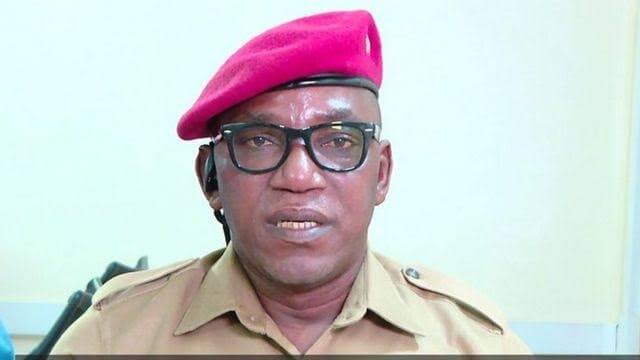
Former Minister of Sports, Solomon Dalung, has opened up about a surprising and thought-provoking conversation he once had with a young man who claimed to be living in the bush as a bandit. Dalung shared the experience during an interview with News Central, explaining how the encounter gave him a deeper understanding of the issues fueling insecurity……CONTINUE READING

According to Dalung, he was browsing TikTok when he came across the young man, who openly described himself as someone living in the forest due to ongoing conflict. Curious, Dalung asked why they engaged in violent activities. The young man responded that they had suffered losses themselves and felt targeted by vigilante groups who, according to him, harmed their people and took their cattle. This, he said, pushed them into retaliation and led them deeper into the bush.

Dalung explained that he challenged the young man, pointing out that innocent people—including other Fulani individuals—were being harmed in the process. The young man replied that, from their viewpoint, only those living in the bush were considered part of their community, while anyone living in town was seen differently. It was a response that, according to Dalung, revealed how distorted perceptions can worsen the cycle of conflict.

Wanting to know if there was any path toward peace, Dalung asked what could help end the violence. The young man shared that they were open to negotiation and discussions that could encourage them to give up their weapons and reintegrate into society. Dalung noted that the confidence with which the young man spoke was unsettling, but it also showed that dialogue could be part of the solution.

Reflecting on the experience, Dalung urged the National Assembly to consider constitutional changes that would allow Nigerians the legal right to defend themselves responsibly, especially in areas affected by insecurity.

His conversation serves as a reminder of how complex the nation’s security challenges are—and how personal engagement, understanding, and strategic dialogue may help chart a way forward.

Continue Reading

Crime

BREAKING: EFCC Drags Ex-Justice Minister Malami—What He Said Will Shock You

Published

on

BREAKING: EFCC Drags Ex-Justice Minister Malami—What He Said Will Shock You

Nigeria’s former Attorney-General of the Federation and Minister of Justice, Abubakar Malami (SAN), has confirmed that the Economic and Financial Crimes Commission (EFCC) has officially summoned him—sending shockwaves across the nation’s political landscape…….CONTINUE READING

Malami, who served from 2015 to 2023 under ex-President Muhammadu Buhari, broke the news himself in a bold announcement on his social media page, declaring that he is ready to face investigators head-on.

The once-powerful justice minister, known for steering some of the country’s most controversial legal battles—from massive asset recovery operations to heated anti-corruption reforms—now finds himself at the centre of a fresh probe.
Throughout his tenure, Malami was linked to numerous high-stakes decisions, arbitration wars, and sensitive financial crime cases that kept him in the public eye.

In recent years, however, scrutiny tightened around issues such as asset declarations and management of recovered funds—allegations he has firmly and repeatedly rejected.

For now, the EFCC remains tight-lipped, refusing to disclose what exactly Malami is being called in for, leaving the public buzzing with speculation.

In a confident statement on Facebook, Malami wrote:

“This is to confirm that I have been invited by the EFCC.
As a law-abiding and patriotic citizen, I reaffirm my commitment to honour the invitation.
I understand the spirit of accountability and transparency in public service—principles I have always advocated.
I am committed to sharing developments with the Nigerian public as they unfold.”

With Malami’s pledge to keep Nigerians updated, all eyes are now fixed on the unfolding drama—a saga that promises to shake up the nation’s justice and political corridors once again.

Continue Reading

Trending